
HIPAA Compliance for Psychiatrists
The nature of HIPAA compliance for psychiatrists can vary depending on whether a psychiatrist is a sole practitioner that qualifies as a HIPAA covered entity, a unit within a managed care organization, part of an affiliated entity, a hybrid entity, a business associate, or a member of a HIPAA covered organization’s workforce.
There is no one-size-fits-all guide to HIPAA compliance for psychiatrists. This is because some psychiatrists are responsible for all elements of HIPAA compliance, others may subcontract elements of HIPAA compliance to business associates, and others may work in – or for – an organization in which responsibility for HIPAA compliance is assigned to a compliance officer.
Due to these factors, some mental health professionals have more autonomy than others with regards to what HIPAA compliance for psychiatrists consists of. In addition, both the HIPAA Privacy Rule and the HIPAA Security Rule allow a flexibility of approach depending on the size, the type of activities that relate to Protected Health Information (PHI), and the capabilities of a practice.
However, while the HIPAA policies and procedures implemented by different types of organizational structures can vary, the primary objective of HIPAA compliance for psychiatrists is still the same – to safeguard the privacy and security of PHI. Fulfilling this objective has an additional significance in psychiatry due to the importance of trust in the doctor-patient relationship.
HIPAA Training for Small Medical Practices Our training includes specific lessons covering the unique HIPAA-challenges that can arise in small medical practices The Gold Standard in HIPAA Training by The HIPAA Journal Team HIPAA Training for Small Medical Practices Our training includes specific lessons covering the unique HIPAA-challenges that can arise in small medical practices The Gold Standard in HIPAA Training by The HIPAA Journal Team Lessons Cover Emerging Issues Like AI Tools | CEUs & Certificate | Completion Tracking | HIPAA Training for Individuals
Trust in the Doctor-Patient Relationship
Writing for psychiatrist.com, Rustad JK et al claim that trust in the doctor-patient relationship is a bidirectional process based on shared expectations. The shared expectations include medical factors such as competence, reliability, and communication – which can be further subject to emotional and cognitive factors – and ethical factors such as privacy and confidentiality.
HIPAA compliance for psychiatrists has a part to play in supporting trust in the doctor-patient relationship inasmuch as the HIPAA Privacy Rule provides a federal floor of privacy standards, while the HIPAA Security Rule governs how the confidentiality and integrity of PHI should be ensured when PHI is created, received, stored, or transmitted electronically.
The failure to comply with the standards of the HIPAA Privacy and Security Rules can result in impermissible disclosures of PHI and data breaches. When these events result in patients becoming victims of medical identity theft, patients can lose trust and confidence in their healthcare providers as demonstrated in the 2015 Ponemon Survey on Medical Identity Theft.
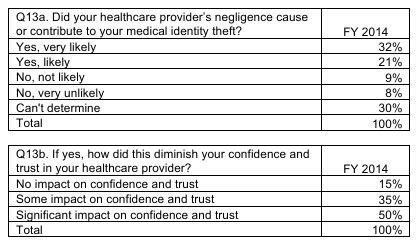
Source: Ponemon 2015 Survey on Medical Identity Theft
As mental health professionals are aware, any loss of trust can impact a patient’s willingness to seek care, disclose sensitive information, agree to treatment, and follow recommendations – potentially resulting in adverse patient outcomes. To avoid these consequences, psychiatrists need to ensure compliance with HIPAA is maintained by all members of the workforce under their control.
HIPAA Compliance for Psychiatrists by HIPAA Status
To help explain what HIPAA compliance for psychiatrists can consist of, the following list of “HIPAA statuses” starts with organizational structures that have the most compliance obligations for psychiatrists. The number of compliance obligations for psychiatrists generally reduces further down the list, but this is not guaranteed in all cases.
Sole Practitioner Psychiatrist
A sole practitioner psychiatrist qualifies as a HIPAA covered entity when they conduct – or subcontract – electronic healthcare transactions for which the Secretary for Health and Human Services has adopted standards. The standards generally cover transactions with health plans and public health programs (i.e., Medicare) relating to eligibility for treatment, encounter information, claims, and billing.
A sole practitioner psychiatrist that qualifies as a HIPAA covered entity is responsible for determining which standards in HIPAA Administrative Simplification Regulations are applicable to the practice, and developing policies and procedures – or implementing measures – to comply with the standards. The policies and procedures must reflect the content of the practice’s HIPAA Notice of Privacy Practices.
A sole practitioner is also responsible for entering into Business Associate Agreements with business partners to whom PHI is disclosed (including billing services and software vendors), and if a sole practitioner employs any workforce members (medical or non-medical) they must provide HIPAA training for the workforce members relevant to their functions and security awareness training.
HIPAA Training for Psychiatrists
HIPAA training for psychiatrists helps protect highly sensitive mental health information by teaching practical privacy, security, and breach response requirements that apply in everyday clinical work. Effective training should go beyond definitions and focus on real scenarios psychiatrists face, including minimum necessary disclosures, identity verification when speaking with family members or caregivers, handling requests for records, documenting disclosures appropriately, and safeguarding electronic PHI in EHRs, email, telehealth platforms, and mobile devices. Training should also reinforce security awareness against phishing and social engineering, plus clear incident reporting steps so potential breaches are escalated early. Annual HIPAA training is an industry best practice for psychiatrist practices, and it supports consistent compliance even as workflows and risks change. Alongside practice training, individual psychiatrists should also obtain HIPAA certification through a reputable online program with structured modules and knowledge checks that issues a completion certificate, providing credible documentation of competency and reinforcing HIPAA fundamentals and specialist topics relevant to clinical settings.
Managed Care Organizations and Affiliated Entities
Managed care organizations (also known as collaborative care models) can consist of healthcare providers in different disciplines that work together under a single structural “umbrella of health care” or as independent units of (for example) an HMO. Most managed care organizations – and the units within them – qualify as HIPAA covered entities.
Managed care organizations that provide an “umbrella of health care” can – but are not required to – designate themselves as a single affiliated entity for the purpose of HIPAA compliance. This would mean that all the units within the organization share the same HIPAA Notice of Privacy Practices, which would mean they would also share the same HIPAA policies and procedures.
Psychiatry practices that remain independent are required to comply with HIPAA in the same way as a sole practitioner psychiatrist. However, larger psychiatry practices most often have a designated compliance officer who is assigned the responsibility for HIPAA compliance. Alternatively, the responsibility for HIPAA compliance can be subcontracted out to a management organization.
Hybrid Entities and Business Associates
Hybrid entities are psychiatry practices that are governed by HIPAA regulations some of the time, and by a different set of regulations the rest of the time. In the context of HIPAA compliance for psychiatrists, an example would be a psychiatrist who has a private (qualifying) HIPAA practice, but who also provides student mental health services in a publicly funded school.
Students’ healthcare records are protected by the Family Educational Rights and Privacy Act (FERPA) and would have to be kept separate from PHI created, received, or stored for HIPAA-regulated purposes. The HIPAA element of compliance would be no different from that of a sole practitioner psychiatrist inasmuch as a hybrid entity must comply with HIPAA for all HIPAA-regulated activities.
If the same psychiatrist did not have a private qualifying HIPAA practice, but provided services on behalf of a qualifying practice, they could either do so as a business associate or as a member of the practice’s workforce. In the first scenario, they would have to comply with the practice’s HIPAA policies and procedures, but could only be sanctioned for HIPAA violations by HHS’ Office for Civil Rights.
Members of a HIPAA Covered Organization’s Workforce
When a psychiatrist is a member of a HIPAA covered organization’s workforce, the psychiatrist must comply with the covered organization’s HIPAA policies and procedures. Any failure to comply with the policies and procedures would be sanctioned by the covered organization unless the nature of the violation is criminal – i.e., a wrongful disclosure in violation of §1177 of the Social Security Act.
As a member of a covered organization’s workforce – or as a unit of a managed care organization in which the responsibility for HIPAA compliance is assigned to a compliance officer – psychiatrists have no autonomy over what HIPAA policies and procedures are implemented or how they are enforced. However, they are required to comply with the HIPAA Privacy Rule regardless of an organization’s privacy policies.
This is because §164.530(e) of the HIPAA Privacy Rule requires covered organizations to apply sanctions “against members of its workforce who fail to comply with the privacy policies and procedures of the covered entity or the requirements of this subpart [the HIPAA Privacy Rule] or subpart D of this part [the HIPAA Breach Notification Rule]”. A covered organization that fails to apply sanctions is itself in violation of HIPAA.
HIPAA Compliance for Psychiatrists is Not Straightforward
Regardless of a psychiatrist’s “HIPAA status”, all mental health professionals should have an understanding of what HIPAA compliance for psychiatrists can consist of. Even mental health professionals not governed by HIPAA should be aware what HIPAA compliance means because many states have data privacy and security regulations with similar requirements to HIPAA.
In this respect, it is important for mental health professionals to be aware of how HIPAA has extra protection for psychotherapy notes, how HIPAA aligns with the confidentiality of SUD records (42 CFR Part 2), and how security awareness programs must be designed to protect against any reasonably anticipated uses or disclosures of electronic PHI not permitted by the HIPAA Privacy Rule (§164.306(a)).
Due to the complexity of HIPAA compliance for psychiatrists and the risk that non-compliance could result in a loss of trust in the doctor-patient relationship, mental health professionals with a responsibility for developing and implementing HIPAA policies and procedures are advised to review their current compliance efforts to ensure they are adequate to safeguard the privacy and security of PHI.
Mental health professionals with questions about HIPAA compliance for psychiatrists are advised to seek independent advice from a healthcare compliance professional, or – if a member of a covered organization’s workforce – from the organization’s HIPAA Privacy Officer. Alternatively, HHS has published mental and behavioral health resources for patients, family and friends of patients, and mental health professionals.
HIPAA Training for Small Medical Practices Our training includes specific lessons covering the unique HIPAA-challenges that can arise in small medical practices The Gold Standard in HIPAA Training by The HIPAA Journal Team HIPAA Training for Small Medical Practices Our training includes specific lessons covering the unique HIPAA-challenges that can arise in small medical practices The Gold Standard in HIPAA Training by The HIPAA Journal Team Lessons Cover Emerging Issues Like AI Tools | CEUs & Certificate | Completion Tracking | HIPAA Training for Individuals
HIPAA Training
For Psychiatrists
Our HIPAA training for psychiatrists provides employees with a clear and practical understanding of what to do and why in real-world HIPAA scenarios.
The Gold Standard in HIPAA Training
by The HIPAA Journal Team




