

Steve Alder


Alaska Department of Health and Social Services Revises 2018 Breach Victim Total from 501 to 500K-700K
A laptop computer malware infection discovered by the Alaska Department of Health and Social Services (ADHSS) in April 2018 was initially thought to have potentially allowed hackers to gain access to the electronic protected health information (ePHI) of 501 individuals; however, the breach has been determined to be far more extensive than was initially thought. On January 22, 2019, state officials said the malware potentially allowed the attackers to access and obtain the ePHI of between 500,000 and 700,000 individuals and that notification letters to the additional breach victims people had started to be sent. Two days later, the number of breach victims was revised to 87,000 individuals. The malware variant used in the attack was a variant of the Zeus/Zbot Trojan – An information stealer. The individuals whose ePHI was potentially obtained by the hackers had interacted at some point with the Department of Public Assistance (DPA) through the DPA Northern regional offices. Last year, ADHSS said the laptop had accessed sites in Russia, had unauthorized software installed, and other...
New Report Reveals Spiraling Cost of Cyberattacks
A new report from Radware has provided insights into the threat landscape in 2018 and the spiraling cost of cyberattacks. The report shows there has been a 52% increase in the cost of cyberattacks on businesses in since 2017. For the report, Radware surveyed 790 managers, network engineers, security engineers, CIOs, CISOs, and other professionals in organizations around the globe. Respondents to the survey were asked about the issues they have faced preparing for and mitigating cyberattacks and the estimated cost of those attacks. The 2018 Threat Landscape 93% of surveyed firms said they had experienced a cyberattack in the past 12 months. The biggest threat globally was ransomware and other extortion-based attacks, which accounted for 51% of all attacks. In 2017, 60% of cyberattacks involved ransoms. The reduction has been attributed to cybercriminals switching from ransomware to cryptocurrency mining malware. Political attacks and hacktivism accounted for 31% of attacks, down from 34% in 2017. The motive behind 31% of attacks was unknown, which demonstrates that attackers are now...
Hospital Associations Call for Industry-Wide Effort to Accelerate Interoperability
Seven leading hospital associations, including the American Hospital Association (AHA), are calling for an industry-wide effort to improve data sharing. The new report seeks to enlist and expand public and private stakeholder support to accelerate interoperability and help remove the barriers to data sharing. In order to achieve the full potential of the nation’s healthcare system, health data must flow freely. Only then will it be possible to provide the best possible care to patients, properly engage people in their health, improve public health, and ensure new models of healthcare succeed. Effective sharing of patient data strengthens care coordination, improves safety and quality, empowers patients and their families, increases efficiency, reduces healthcare costs, and supports the accurate tracking of diseases and the creation of robust public health registries. The report explains that great progress is being made to improve interoperability of health IT systems and ensure that patients data can be accessed regardless of location or system. 93% of hospitals now allow patients...
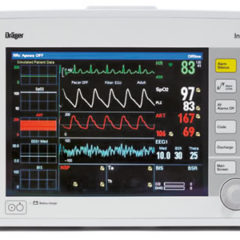
Vulnerabilities Identified in Dräger Infinity Delta Patient Monitors
The U.S. Department of Homeland Security Industrial Control Systems Cyber Emergency Team (US-CERT) has issued an advisory about three vulnerabilities affecting Dräger Infinity Delta patient monitoring devices. The flaws affect all versions of Infinity Delta, Delta XL, Kappa, and infinity Explorer C700 patient monitoring devices. The flaws could lead to the disclosure of sensitive information stored in device logs, be leveraged to conduct Denial of Service (DoS) attacks, or could potentially allow an attacker to gain full control of the operating system of a vulnerable device. The flaws were discovered by Marc Ruef and Rocco Gagliardi of scip AG. The vulnerabilities are detailed below, in order of severity: CVE-2018-19014 (CWE-532) – Exposure of Information in Log Files Log files are not appropriately secured and are accessible over an unauthenticated network. An attacker could gain access to device log files and view sensitive information relating to the internals of the monitor, location of the device, and its wired network configuration. The flaw has been assigned a CVSS v3 base...

Valley Hope Association Notifies Patients of Email Account Breach
Valley Hope Association has announced that an unauthorized individual has gained access to the email account of an employee. Valley Hope Association became aware of a potential account breach on October 10, 2018, when unusual account activity was detected. Prompt action was taken to prevent further account access and a third-party computer forensics firm was hired to determine the nature and scope of the breach. The investigation confirmed on November 23, 2018, that an unauthorized individual had accessed a single email account between October 9-10, 2018, and potentially viewed emails and attachments containing patients’ protected health information. After a thorough review of all emails and email attachments, the forensics firm confirmed that certain patients’ PHI may have been accessed. The types of information contained in the emails varied from patient to patient and may have included one or more of the following data elements: Name, address, date of birth, Social Security number, medication and prescription information, claims and billing information, medical record number,...

Get The FREE
HIPAA Compliance Checklist
Immediate Delivery of Checklist Link To Your Email Address
Please Enter Correct Email Address
Your Privacy Respected
HIPAA Journal Privacy Policy
Get The FREE
HIPAA Compliance Checklist
Immediate Delivery of Checklist Link To Your Email Address
Please Enter Correct Email Address
Your Privacy Respected
HIPAA Journal Privacy Policy




