

Steve Alder



AMIA and AHIMA Call for Changes to HIPAA to Improve Access and Portability of Health Data
The American Medical Informatics Association (AMIA) and the American Health Information Management Association (AHIMA) have called for changes to HIPAA to be made to improve patients’ access to their health information, make health data more portable, and to better protect health data in the app ecosystem. At a Wednesday, December 5, 2018, Capitol Hill briefing session, titled “Unlocking Patient Data – Pulling the Linchpin of Data Exchange and Patient Empowerment,” leaders from AMIA and AHIMA joined other industry experts in a discussion about the impact federal policies are having on the ability of patients to access and use their health information. Currently, consumers have access to their personal information and integrate and use that information to book travel, find out about prices of products and services from different providers, and conduct reviews and comparisons. However, while many industries have improved access to consumer information, the healthcare industry is behind the times and has so far failed to implement a comparable, patient-centric system. “Congress has...
PHI of 41,000 Patients of Cancer Centers of America Potentially Compromised in Phishing Attack
Cancer Centers of America’s Western Regional Medical Center in Bullhead City, AZ, has discovered the email account of one of its employees has been compromised as a result of a response to a phishing email. The phishing email appeared to have been sent from the email account of a Cancer Treatment Centers of America executive and used social engineering techniques to fool the employee into disclosing login credentials to the account. The attacker was able to access the account, but only for a limited time as the account compromise was detected by IT staff and the user ‘s account password was reset. However, during the time that the email account was accessible it is possible that some messages containing patients’ protected health information (PHI) was accessed. Cancer Treatment Centers of America called in a nationally recognized computer forensics firm to assist with the investigation. While it was not possible to tell which, if any, emails were accessed, it was discovered that the compromised email account contained the PHI of 41,948 patients. The information in the emails varied...
Ransomware Attacks Reported by Healthcare Providers in Illinois and Rhode Island
A roundup of recent healthcare ransomware attacks, privacy breaches, and security incidents that have been announced in the past few days. Center for Vitreo-Retinal Diseases Ransomware Attack Impacts 20,371 Patients The Center for Vitreo-Retinal Diseases in Libertyville, IL, experienced a ransomware attack that resulted in the encryption of data on its servers. The attack was detected on September 18, 2018. The investigation into the breach suggests the attacker may have gained access to the protected health information of 20,371 patients that was stored on the affected servers. The attack appeared to have been conducted with the intention of extorting money from the practice. While it is possible that patient information was accessed by the attacker, no evidence of unauthorized data access, data theft, or misuse of patient information has been discovered. The information that was potentially compromised included names, addresses, telephone numbers, birth dates, health insurance information, health data, and the Social Security numbers of Medicare patients. The Center for...
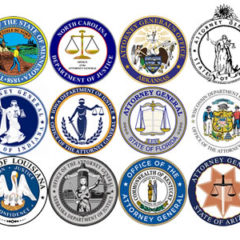
12 State Attorneys General File HIPAA Breach Lawsuit Against Medical Informatics Engineering
A multi-state federal lawsuit has been filed against Medical Informatics Engineering and NoMoreClipboard over the 2015 data breach that exposed the data of 3.9 million individuals. Indiana Attorney General Curtis Hill is leading the lawsuit and 11 other states are participating – Arizona, Arkansas, Florida, Iowa, Kansas, Kentucky, Louisiana, Minnesota, Nebraska, North Carolina and Wisconsin. This is the first time that state attorneys general have joined forces in a federal lawsuit over a data breach caused by violations of the Health Insurance Portability and Accountability Act. The lawsuit seeks a financial judgement, civil penalties, and the adoption of a corrective action plan to address all compliance failures. A Failure to Implement Adequate Security Controls The lawsuit alleges Medical Informatics Engineering failed to implement appropriate security to protect its computer systems and sensitive patient data and, as a result of those failures, a preventable data breach occurred. According to the lawsuit, “Defendants failed to implement basic industry-accepted data...
OCR Fines Florida Contractor Physicians’ Group $500,000 for Multiple HIPAA Compliance Failures
An HHS’ Office for Civil Rights (OCR) investigation into an impermissible disclosure of PHI by a business associate of a HIPAA-covered entity revealed serious HIPAA compliance failures. Advanced Care Hospitalists (ACH) is a Lakeland, FL-based contractor physicians’ group that provides internal medicine physicians to nursing homes and hospitals in West Florida. ACH falls under the definition of a HIPAA-covered entity and is required to comply with the HIPAA Privacy, Security, and Breach Notification Rules. ACH serves approximately 20,000 patients a year and employed between 39 and 46 staff members per year during the time frame under investigation. Between November 2011 and June 2012, ACH engaged the services of an individual who claimed to be a representative of Doctor’s First Choice billings Inc., a Florida-based provider of medical billing services. That individual used First Choice’s company name and website, but according to the owner of First Choice, those services were provided without the knowledge or permission of First Choice. A local hospital notified ACH on February 11,...

Get The FREE
HIPAA Compliance Checklist
Immediate Delivery of Checklist Link To Your Email Address
Please Enter Correct Email Address
Your Privacy Respected
HIPAA Journal Privacy Policy
Get The FREE
HIPAA Compliance Checklist
Immediate Delivery of Checklist Link To Your Email Address
Please Enter Correct Email Address
Your Privacy Respected
HIPAA Journal Privacy Policy




