

Steve Alder


Altus Hospital Baytown Suffers Dharma Ransomware Attack
Altus Hospital in Baytown, TX, has experienced a ransomware attack that resulted in the encryption of many hospital records. The electronic medical record system was not affected, although some of the encrypted files contained patients’ protected health information including names, home addresses, contact telephone numbers, birth dates, Social Security numbers, credit card information, driver’s license numbers, and medical information. The attack was discovered on September 3, 2018. Altus Hospital received a ransom demand; however, assisted by a third-party security consultant, Altus Hospital was able to restore all affected files from backups. The investigator determined that the attacker gained access to the hospital’s servers before deploying a Dharma ransomware variant. Altus Hospital believes the aim of the attack was solely to extort money from the hospital. Data access and theft of patient information is not believed to have occurred. While the attack was limited to Baytown hospital servers, some of the information stored on those servers came from the following affiliated...
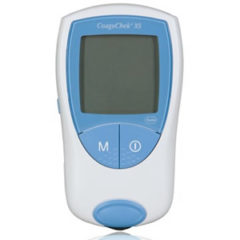
Vulnerabilities Identified in Roche Point of Care Handheld Medical Devices
ICS-CERT has issued an advisory concerning five vulnerabilities that have been identified in Roche Point of Care handheld medical devices. Four vulnerabilities are high risk and one has been rated medium risk. Successful exploitation of the vulnerabilities could allow an unauthorized individual to gain access to the vulnerable devices, modify system settings to alter device functionality, and execute arbitrary code. The vulnerabilities affect the following Roche Point of Care handheld medical devices. Accu-Chek Inform II (except Accu-Chek Inform II Base Unit Light and Accu-Chek Inform II Base Unit NEW with Software 04.00.00 or later) CoaguChek Pro II CoaguChek XS Plus & XS Pro Cobas h 232 POC Including the related base units (BU), base unit hubs and handheld base units (HBU). CVE-2018-18564 is an improper access control vulnerability. An attacker in the adjacent network could execute arbitrary code on the system using a specially crafted message. The vulnerability is rated high severity and has been assigned a CVSS v3 base score of 8.3. The vulnerability is present in:...
OIG Finds Deficiencies in FDA’s Policies and Procedures to Address Cybersecurity Risk to Postmarket Medical Devices
The HHS’ Office of Inspector General (OIG) has published the findings of an audit of the FDA’s policies and procedures for addressing medical device cybersecurity in the postmarket phase. Several deficiencies in FDA policies and procedures were identified by OIG auditors. Ensuring the safety, security, and effectiveness of medical devices is a key management challenge for the Department of Health and Human Services. It is the responsibility of the U.S. Food and Drug Administration (FDA) to ensure all medical devices that come to market are secure and incorporate cybersecurity protections to prevent cyberattacks that could alter the functionality of the devices which could cause harm to patients. The FDA has developed policies and procedures to ensure that cybersecurity protections are reviewed before medical devices come to market and the agency has plans and processes for addressing medical device issues, such as cybersecurity incidents, in the postmarket stage. However, OIG determined that those plans and practices are insufficient in several areas. One area of weakness concerns...
566,217 Customers of Chicago-Based Health Insurer Impacted by Data Breach
The Chicago-based health insurer Bankers Life, a division of CNO Financial Group Inc., has discovered hackers gained access to its systems and potentially stole the personal information of more than half a million individuals. Bankers Life provides a range of insurance services to customers, including life insurance, long term care insurance, health insurance, and Medicare supplemental insurance and is the largest division of CNO Financial Group. Hackers gained access to its systems between May 30 and September 13, 2018. Bankers Life said it discovered the breach on August 7, 2018. The hackers gained access to a range of sensitive personal information of a ‘limited number’ of its employees. A ‘limited group’ of customers had names, Social Security numbers, driver’s license numbers, bank account numbers, state identification numbers, medication information, diagnoses, and treatment information exposed. The protected health information of a much larger group of customers was also potentially accessed by the hackers. For that group, names, addresses, dates of birth, insurance policy...
Q3 Healthcare Data Breach Report: 4.39 Million Records Exposed in 117 Breaches
The latest installment of the Breach Barometer Report from Protenus shows there was a quarterly fall in the number of healthcare data breaches compared to Q2, 2018; however, the number of healthcare records exposed, stolen, or impermissibly disclosed increased in Q3. In each quarter of 2018, the number of healthcare records exposed in data breaches has risen. Between January and March 1,129,744 healthcare records were exposed in 110 breaches. Between April and June, 3,143,642 records were exposed in 142 breaches, and 4,390,512 healthcare records were exposed, stolen, or impermissibly disclosed between July and September in 117 breaches. The largest healthcare data breach in Q3 was reported by the Iowa Health System UnityPoint Health. The breach was due to a phishing attack that saw multiple email accounts compromised. Those accounts contained the protected health information of more than 1.4 million patients. That breach was the second phishing attack experienced by UnityPoint Health. An earlier phishing attack resulted in the exposure of 16,400 healthcare records. In Q3, hacking...

Get The FREE
HIPAA Compliance Checklist
Immediate Delivery of Checklist Link To Your Email Address
Please Enter Correct Email Address
Your Privacy Respected
HIPAA Journal Privacy Policy
Get The FREE
HIPAA Compliance Checklist
Immediate Delivery of Checklist Link To Your Email Address
Please Enter Correct Email Address
Your Privacy Respected
HIPAA Journal Privacy Policy




