

Steve Alder


Qcentive Controls AWS Costs & Enables Cloud Computing in Healthcare with ParkMyCloud
The Massachusetts-based healthcare startup Qcentive, the developer of a cloud-based platform that helps healthcare companies with the creation and management of value-based contracts, was one of the first companies authorized to move healthcare data to the cloud. The first-in-class transaction platform has been certified as HIPAA compliant and incorporates appropriate safeguards to ensure the confidentiality, integrity, and availability of ePHI. The company uploads patient and healthcare contract information to AWS, where the data are accessed by the company’s application. The platform helps its health plan clients and their value-based contracting providers analyze claims data and patient information such as emergency room visits and use the information to quickly calculate potential savings. While developing the platform, Qcentive uploaded large quantities of patient and claim data to AWS and created AWS resources as necessary, although as many companies discover, AWS costs can quickly mount up. Qcentive tried to find a way to keep its AWS costs under control, starting with...
Associated Dermatology & Skin Cancer Clinic of Helena Discloses PHI Breach Impacting 1,254 Patients
This week, Associated Dermatology & Skin Cancer Clinic of Helena, MT, has disclosed a breach of physical protected health information (PHI) affecting 1,254 patients. A journal maintained by an employee of Associate Dermatology was stolen from her vehicle on May 26, 2018. A thief forcibly gained access to the vehicle and stole the personal journal, which contained information to help the employee with the provision of care to patients. The types of information recorded in the journal included names and ages of patients, their referring physicians, brief notes on patients’ medical histories, reasons for visits, and visit notes. Patients whose PHI has been obtained by the thief had received medical services through Associated Dermatology between September 1, 2017 and May 24, 2018. While highly sensitive information – the types that can be used to steal identities – were not stored in the journal, there is potential the information could be misused, although no reports have been received to date to suggest that is the case. The biggest risk is the use of the information in social...
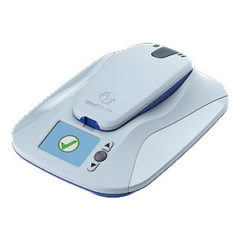
Vulnerabilities Identified in Medtronic MyCareLink Patient Monitors
ICS-CERT has issued an advisory about two recently discovered vulnerabilities in Medtronic MyCareLink patient monitors. The devices are used by patients with implantable cardiac devices to transmit their heart rhythm data directly to their clinicians. While the devices have safeguards in place and transmit information over a secure Internet connection, the vulnerabilities could potentially be exploited by a malicious actor to gain privileged access to the operating system of the devices. The vulnerabilities – a hard-coded password vulnerability (CWE-259 / CVE-2018-8870) and an exposed dangerous method of function (CWE-749 / CVE-2018-8868) vulnerability – exist in all versions of 24950 and 24952 MyCareLink Monitors. The former has been assigned a CVSS v3 score of 6.4 and the latter a CVSS v3 score of 6.2. The vulnerabilities were discovered by security researcher Peter Morgan of Clever Security, who reported the issues to NCCCIC. Exploitation of the hard-coded password vulnerability would require physical access to the device. After removing the case, an individual could...
Business Email Compromise Attacks Dominate 2017 FBI Internet Crime Report
The FBI has released its 2017 Internet Crime Report. Data for the report came from complaints made through its Internet Crime Complaints Center (IC3). The report highlights the most common online scams, the scale of Internet crime, and the substantial losses suffered as a result of Internet-related crimes. In 2017, there were 301,580 complaints made to IC3 about Internet crime, with total losses for the year exceeding $1.4 billion. Since 2013, when the first Internet Crime Report was first published, more than $5.52 billion has been lost in online scams and more than 1.4 million complaints have been received. The leading types of online crime in 2017 were non-payment/non-delivery, personal data breaches, and phishing; however, the biggest losses came from business email compromise (BEC) attacks, confidence scams/romance fraud, and non-payment/non-delivery. The losses from business email compromise scams (and email account compromise scams on consumers) exceeded $675 million. BEC/EAC scams resulted in more than three times the losses as confidence fraud/romance scams – the second...
Michigan Medicine Informs Hundreds of Patients of PHI Exposure
An unencrypted laptop computer containing the protected health information (PHI) of 870 patients of Michigan Medicine has been stolen. The PHI was saved on a personal laptop computer which had been left unattended in an employee’s vehicle. A thief broke into the car and stole the employee’s bag, which contacted the device. The theft occurred on June 3, 2018 and it was immediately reported to law enforcement. Michigan Medicine was informed of the theft the following day on June 4. The laptop contained a range of protected health information of patients who had participated in research studies. The types of information exposed varied depending on the type of research the patients had participated in. Highly sensitive information such as Social Security numbers, health plan ID numbers, and financial information were not stored on the device and addresses and contact telephone numbers were not exposed. The information exposed was limited to names, medical record numbers, gender, race, diagnoses, and treatment information. All of the research studies had been approved by the...

Get The FREE
HIPAA Compliance Checklist
Immediate Delivery of Checklist Link To Your Email Address
Please Enter Correct Email Address
Your Privacy Respected
HIPAA Journal Privacy Policy
Get The FREE
HIPAA Compliance Checklist
Immediate Delivery of Checklist Link To Your Email Address
Please Enter Correct Email Address
Your Privacy Respected
HIPAA Journal Privacy Policy




