

Steve Alder


Q3, 2017 Healthcare Data Breach Report
In Q3, 2017, there were 99 breaches of more than 500 records reported to the Department of Health and Human Services’ Office for Civil Rights (OCR), bringing the total number of data breaches reported in 2017 up to 272 incidents. The 99 data breaches in Q3, 2017 saw 1,767,717 individuals’ PHI exposed or stolen. So far in 2017, the records of 4,601,097 Americans have been exposed or stolen as a result of healthcare data breaches. Q3 Data Breaches by Covered Entity Healthcare providers were the worst hit in Q3, reporting a total of 76 PHI breaches. Health plans reported 17 breaches and there were 6 data breaches experienced by business associates of covered entities. There were 31 data breaches reported in July, 29 in August, and 39 in September. While September was the worst month for data breaches, August saw the most records exposed – 695,228. The Ten Largest Healthcare Data Breaches in Q3, 2017 The ten largest healthcare data breaches reported to OCR in Q3, 2017 were all the result of hacking/IT incidents. In fact, 36 out of the 50 largest healthcare data breaches in...
Bill Introduced to Standardize State Data Breach Notification Laws
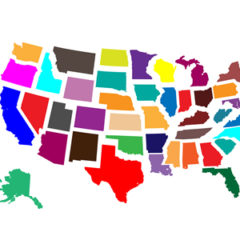
The HIPAA Breach Notification Rule explains how HIPAA covered entities and their business associates’ data breach response should include issuing notifications to patients, plan members and the HHS’ Office for Civil Rights. Healthcare organizations must also comply with state data breach notification laws, which in some U.S. states, requires notifications to be issued more rapidly. Those laws cover different types of information, have additional notification requirements, and in some states, require credit monitoring and identity theft protection services to be offered to breach victims. Currently, there are 48 separate state data breach notification laws. For a small health system operating in one or two states, keeping up to date with relevant state data breach notification laws is straightforward. For large health systems and health plans that operate in multiple states, keeping up to date with changes to state laws, and ensuring compliance with those laws, can be a challenge. Bill Proposes Standardization of State Data Breach Notification Laws Congressman Jim Langevin (D-RI)...
Former Nurse Convicted of Theft of Patient Information and Tax Fraud
A former nurse from Midway, FL has been convicted of wire fraud, theft of government funds, possession of unauthorized access devices and aggravated identity theft by a court in Tallahassee. 41-year old Tangela Lawson-Brown was employed as a nurse in a Tallahassee nursing home between October 2011 and December 2012. During her time at the nursing home, Lawson-Brown stole the personal information of 26 patients, although she was discovered to have a notebook containing the personal information of 150 individuals. According to a press release issued by the United States Attorney’s Office for the Northern District of Florida, Lawson-Brown’s husband was arrested in January 2013 and items were seized from Lawson-Brown’s vehicle by the Tallahassee Police Department, including the notebook. The police investigation revealed that in 2011, Lawson-Brown used the stolen credentials to file fraudulent tax returns in the names of 105 individuals, including 24 patients of the nursing home. Lawson-Brown filed claims totaling more than $1 million. The IRS detected many of the claims as fraudulent,...
Amida Care Mailing Potentially Revealed HIV Status of its Members
The New York not-for-profit community health plan Amida Care has reported a HIPAA breach that has potentially impacted 6,231 of its members. Amida Care specializes in providing health coverage and coordinated care to Medicaid members suffering from chronic health conditions such as HIV. On July 25, 2017, Amida Care sent a flyer to some of its members who had contracted HIV, advising them of an opportunity to take part in a HIV research project. The double-sided flyers contained details of the HIV research project on one side, and information on an Amida Care Summer Life Celebration event on the other. The decision had originally been made to send out the flyer in windowless envelopes, and those instructions were provided to the mailroom. However, due to fault with the envelope printer, and in order to make sure individuals received the flyer in time, the decision was made to send out the flyer in windowed envelopes. Care was taken to prevent any sensitive information being visible through the clear plastic windows of the envelopes. A blank sheet of paper was included with the...
PHI of 10,500 Patients of an Illinois Psychiatrist Exposed
The medical files of more than 10,000 patients of a Naperville, IL-based psychiatrist – Dr. Riaz Baber, M.D. – have been discovered in the basement of an Aurora property by the woman who rented the house from the psychiatrist. The files had been stored in the basement for at least 4 years. The tenant, Barbara Jarvis-Neavins, was allegedly provided with a key to the basement by the psychiatrist’s wife as access was required when workmen had to visit the property. She was told that she was required to accompany workmen when they needed access. Jarvis-Neavins said she wanted to report the presence of the files – and that she could access the storage area – but thought that by doing so she would be asked to vacate the property. When she was told that she had to move out as the house was being sold, she contacted law enforcement – including the FBI – and state regulators to report the unsecured files. The FBI referred her to the Department of Health and Human Services’ Office for Civil Rights and she filed a complaint. She also contacted NBC 5. NBC 5 reporters...

Get The FREE
HIPAA Compliance Checklist
Immediate Delivery of Checklist Link To Your Email Address
Please Enter Correct Email Address
Your Privacy Respected
HIPAA Journal Privacy Policy
Get The FREE
HIPAA Compliance Checklist
Immediate Delivery of Checklist Link To Your Email Address
Please Enter Correct Email Address
Your Privacy Respected
HIPAA Journal Privacy Policy




