

Steve Alder


Ransomware Attack Reported by Dallas Senior Living Community
A ransomware attack on the Dallas Senior Living Community, Walnut Place, in February resulted in highly sensitive data being encrypted, including Social Security numbers, driver’s license numbers, birth dates, banking and credit card numbers, health insurance information, clinical information and patients’ and residents’ contact information. The ransomware was installed on its systems on January 25, 2017, with the issue remediated 8 days later on February 2, 2017. Third-party security experts were called in to assist with the forensic investigation of the breach and conducted a security scan of its systems to ensure all traces of malware had been removed. The incident report has yet to appear on the Department of Health and Human Services’ Office for Civil Rights breach portal, so it is currently unclear exactly how many individuals have been impacted. Ransomware Attacks and HIPAA Rules Ransomware attacks are not always reportable under HIPAA Rules. If an organization can demonstrate there was a low probability of PHI being acquired, accessed, used or disclosed (see OCR ransomware...
WannaCrypt Ransomware Attacks Stopped, But Only Briefly
The global WannaCrypt ransomware attacks that hit NHS Trusts in the UK hard on Friday have spread to the United States, affecting some U.S. organizations including FedEx. Figures this morning indicate there were more than 200,000 successful attacks spread across 150 countries over the weekend. Fortunately, the variant of the ransomware used in the weekend attacks has been neutralized. On Saturday afternoon, a blogger and security researcher in the UK identified a kill switch and was able to prevent the ransomware from claiming more victims. While investigating the worm element of the ransomware campaign, the researcher ‘Malware Tech’ found a reference to a domain in the code. That domain had not been registered, so Malware Tech purchased and registered the domain. Doing so stopped the ransomware from encrypting files. The ransomware performs a domain check prior to encrypting files. If the ransomware is able to connect with the domain in the code, the ransomware exists and does not encrypt any files. If the connection fails, the ransomware continues and starts encrypting files. The...
Massive Ransomware Attack Hits NHS: Global Warning Issued as Attacks Spread
The UK’s National Health Service (NHS) has experienced its worst-ever ransomware attack. The infections spread rapidly to multiple NHS trusts, forcing computer system shutdowns. Affected hospitals canceled operations with the disruption to patient services still continuing. The attack occurred on Friday and affected 61 NHS hospital trusts, causing chaos for patients. The NHS has been working around the clock to bring its computer systems back online and to recover encrypted data. The massive ransomware attack involved Wanna Decryptor 2.0 ransomware or WannaCry/WanaCryptor as it is also known. There is no known decryptor. The attackers were threatening to delete data if the ransom was not paid within 7 days, with the ransom amount set to double in three days if payment was not made. The ransom demand was reportedly $300 (£230) per infected machine. NHS Trusts saw the ransomware infection rapidly spread to all computers connected to their networks. While the NHS was one of the early victims, the attack has spread globally with the Spanish telecoms company Telefonica also hit, along...
PHI of Thousands of Patients of Bronx Lebanon Hospital Center Exposed Online
Highly sensitive medical records of thousands of patients of New York’s Bronx Lebanon Hospital Center have been exposed online. Those records were reportedly accessible for three years as a result of a misconfigured backup server. The exposed records were uncovered by researchers at the Kromtech Security Research Center after conducting a “regular security audit of exposed rsync protocols on Shodan,” a search engine that can be used to find networked devices. Rsync backup servers are used for transferring files between computer systems and for file syncing. The records were not encrypted nor protected with a password and could have been downloaded by any individual who knew where to look. It is currently unclear exactly how many patient records were exposed, with initial reports indicating tens of thousands of patients may have been affected. NBC’s Mary Emily O’Hara recently reported that the breach has impacted at least 7,000 individuals. The misconfiguration allowed the researchers to view highly sensitive information including names, addresses, medical diagnoses, health...
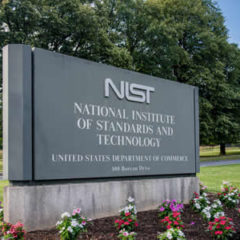
Guidance on Securing Wireless Infusion Pumps Issued by NIST
The National Institute of Standards and Technology (NIST), in collaboration with the National Cybersecurity Center of Excellence (NCCoE), has released new guidance for healthcare delivery organizations on securing wireless infusion pumps to prevent unauthorized access. Infusion pumps, and many other medical devices, used to interact only with the patient and healthcare provider; however, advances in technology have improved functionality and now the devices can interact with a much wider range of healthcare systems and networks. The additional functionality of the devices has allowed vulnerabilities to be introduced that could be easily exploited to cause patients to come to harm. Wireless infusion pumps are of particular concern. Vulnerabilities could be exploited by malicious actors allowing drug doses to be altered, the functioning of the infusion pumps to be changed or patients’ protected health information to be accessed. Typically, the devices have poor cybersecurity protections in place to prevent unauthorized access. The risks introduced by the devices have been widely...

Get The FREE
HIPAA Compliance Checklist
Immediate Delivery of Checklist Link To Your Email Address
Please Enter Correct Email Address
Your Privacy Respected
HIPAA Journal Privacy Policy
Get The FREE
HIPAA Compliance Checklist
Immediate Delivery of Checklist Link To Your Email Address
Please Enter Correct Email Address
Your Privacy Respected
HIPAA Journal Privacy Policy




