
Steve Alder



HIPAA Updates and HIPAA Changes in 2026
HIPAA updates and changes happen more frequently than many people are aware of because of the nature of the updates and their relatively minor impact on HIPAA compliance. Substantial updates to the HIPAA Rules are rare, although major HIPAA updates are long overdue. Steps were taken in December 2020 to address the need for HIPAA changes and HIPAA updates when the HHS’ Office for Civil Rights (OCR) issued a Notice of Proposed Rulemaking (NPRM) to make multiple changes to the HIPAA Privacy Rule. In December 2024, OCR proposed a long-awaited update to the HIPAA Security Rule that adds extensive new cybersecurity requirements for HIPAA-regulated entities and removes the distinction between addressable and required implementation specifications. Final rules implementing the proposed changes to both HIPAA Rules have yet to be issued. In addition to those proposed updates, there has been an update to align the 42 CFR Part 2 – the Confidentiality of Substance Use Disorder Patient Records regulations – more closely with HIPAA, and an update to change the conditions under which PHI...

WindRose Health Network Discloses Data Breach Affecting 33K Individuals
Data breaches have been announced by WindRose Health Network and Advantage Home Health Care in Indiana, Camden-on-Gauley Medical Center in West Virginia, and Lakes Region Visiting Nursing Association in New Hampshire. WindRose Health Network, Indiana WindRose Health Network, a network of Federally Qualified Health Centers that provide primary care and behavioral health services at several locations in central Indiana, has started notifying 33,158 individuals about a cybersecurity incident that exposed limited patient data. An unauthorized third party gained access to a limited part of its network by exploiting a previously undisclosed vulnerability in a remote access tool used by one of its vendors. The vendor informed WindRose Health Network about the vulnerability on August 4, 2026. Immediate action was taken to secure its environment, and cybersecurity experts were engaged to investigate. The investigation determined that the vulnerability had been exploited, resulting in unauthorized network access between August 3 and August 4, 2026. The remote access tool could not be used to...

Senate Unanimously Passes the Health Care Cybersecurity and Resiliency Act
A bipartisan bill that seeks to improve healthcare cybersecurity and resilience has been unanimously passed by the U.S. Senate. The bill – The Health Care Cybersecurity and Resiliency Act (S.B. 3315) – calls for healthcare providers to implement cybersecurity best practices and key cybersecurity measures, and authorizes grants for rural hospitals and under-resourced healthcare providers to help them make the necessary cybersecurity improvements. The Health Care Cybersecurity and Resiliency Act was initially proposed in 2025 by Senator Bill Cassidy (R-LA) and is co-sponsored by Senators Mark Warner (D-VA), John Cornyn (R-TX), and Maggie Hassan (D-NH). The bill was introduced following the ransomware attack on Change Healthcare, which caused massive disruption across the U.S. healthcare system, and seeks to strengthen cyber defenses, improve threat-sharing, establish workforce development and employee cybersecurity training programs, and provide better cybersecurity-related resources to help rural and low-resource healthcare providers bolster their defenses. The...

The 10 Most Common HIPAA Violations To Avoid
HIPAA violations occur when covered entities, business associates, or members of either’s workforces fail to comply with a standard of the HIPAA Privacy, Security, or Breach Notification Rule or a workplace policy implemented to support HIPAA compliance. There are many different types of HIPAA violations, and the ten most common HIPAA violations are: Snooping on Healthcare Records Failure to Perform an Organization-Wide Risk Analysis Failure to Manage Security Risks / Lack of a Risk Management Process Denying Patients’ Access to Health Records/Exceeding Timescale for Providing Access Failure to Enter into a HIPAA-Compliant Business Associate Agreement Insufficient ePHI Access Controls Failure to Use Encryption or an Equivalent Measure to Safeguard ePHI on Portable Devices Exceeding the 60-Day Deadline for Issuing Breach Notifications Impermissible Disclosures of PHI Improper Disposal of PHI In this article, we outline the top 10 HIPAA violations and provide advice on how to avoid them. You can also use the article with our free HIPAA Violations Checklist to understand what is...

CISA Sends CIRCIA Final Rule for White House Review
The U.S. Cybersecurity and Infrastructure Security Agency (CISA) has penned a final rule under the Cyber Incident Reporting for Critical Infrastructure Act (CIRCIA) of 2022, which has been sent to the White House for review. CIRCIA requires CISA to develop and implement regulations for critical infrastructure entities concerning the reporting of cybersecurity incidents and ransomware payments to CISA. CISA worked with the Sector Risk Management Agencies for each of the 16 critical infrastructure sectors, the Department of Justice, other appropriate federal agencies, and the DHS-chaired Cyber Incident Reporting Council when developing the rule. CIRCIA covers 16 critical infrastructure sectors, including healthcare and public health (HPH), and will apply to businesses, government entities, contractors, and other entities. The key requirements are for critical infrastructure entities to report cyber incidents to CISA within 72 hours of a determination that a substantial incident has occurred. In the event of a ransomware attack where a ransom is paid, CISA must be notified within 24...

Get The FREE
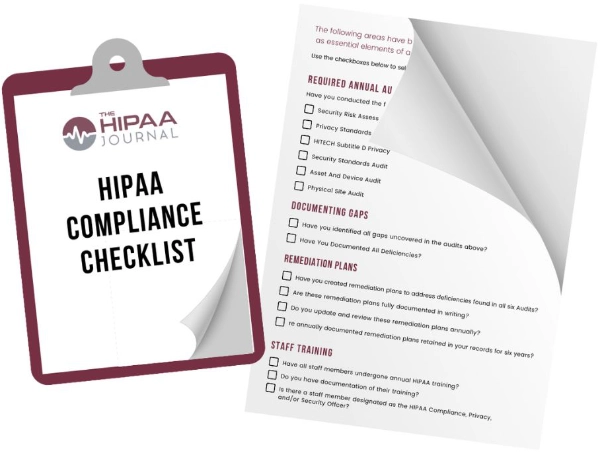
HIPAA Compliance Checklist
Immediate Delivery of Checklist Link To Your Email Address
Please Enter Correct Email Address
Your Privacy Respected
HIPAA Journal Privacy Policy
Get The FREE
HIPAA Compliance Checklist
Immediate Delivery of Checklist Link To Your Email Address
Please Enter Correct Email Address
Your Privacy Respected
HIPAA Journal Privacy Policy