Steve Alder


HIPAA Compliance Regulations
HIPAA Compliance Regulations The latest version of the HIPAA compliance regulations were enacted in the Final Omnibus Rule of 2013. They extend the rights of patients under the HIPAA Privacy Rule, now cover business associates, and introduce new administrative, physical and technical safeguards under the HIPAA Security Rule. The HIPAA compliance regulations reflect changes in working practices and technological advances over the past few years. Many more medical professionals are supporting their workflows by using their personal mobile devices. The misuse, theft or loss of mobile devices is estimated to result in thousands of security breaches every year. The latest HIPAA compliance regulations are intended to prevent these breaches. Compliance with the HIPAA Privacy Rule In addition to extending the HIPAA compliance regulations to business associates, other changes to the HIPAA privacy rule introduce new guidelines for the conditions under which Protected Health Information (PHI) should be disclosed to anybody other than the patient. Effectively, only the minimum “individually...

Can You Make WordPress HIPAA Compliant?
You can make WordPress HIPAA compliant by installing plug-ins into a WordPress site that collect and secure Protected Health Information (PHI) in compliance with HIPAA and by implementing additional safeguards to secure the transmission of PHI from the site to a database. Before explaining how it is possible to make WordPress HIPAA compliant, it is worthwhile covering how HIPAA applies to websites. HIPAA and Websites HIPAA does not specifically cover compliance with respect to websites, HIPAA requirements for websites are therefore a little vague. As with any other forms of electronic capture or transmission of ePHI, safeguards must be implemented in line with the HIPAA Security Rule to ensure the confidentiality, integrity, and availability of ePHI. Those requirements apply to all websites, including those developed from scratch or created using an off-the-shelf platform such as WordPress. Websites must incorporate administrative, physical, and technical controls to ensure the confidentiality of any protected health information uploaded to the website or made available through the...

Feds Sound Alarm About Ghost Ransomware Group
U.S authorities have issued a warning about the China-based Ghost ransomware group, which has conducted ransomware attacks in around 70 countries on multiple industry sectors including healthcare, education, religious institutions, technology, manufacturing, and government networks. The group, also known as Cring, Crypt3r, Phantom, Strike, Hello, Wickrme, HsHarada, and Rapture, has been active since at least 2021, and its victims include many small- to medium-sized businesses. According to the joint cybersecurity alert from the Federal Bureau of Investigation (FBI), Cybersecurity and Infrastructure Security Agency (CISA), and the Multi-State Information Sharing and Analysis Center (MS-ISAC), the group conducts attacks indiscriminately, targeting low-hanging fruit – businesses with poorly secured Internet-facing servers. The group uses publicly available exploits for multiple vulnerabilities, some of which date back to 2009. The group has exploited vulnerabilities in Fortinet FortiOS appliances (CVE-2018-13379), Adobe ColdFusion servers (CVE2010-2861 and CVE-2009-3960), Microsoft...
TRICARE Administrator Pays $11.23M Penalty to Resolve Cybersecurity-related FCA Claims
The U.S. Department of Justice has announced that Health Net Federal Services (HNFS) and its parent company, Centene Corporation, have agreed to pay a $11,253,400 penalty to settle allegations that HNFS falsely certified compliance with the cybersecurity requirements of its Defense Health Agency (DHA) contract to manage the TRICARE healthcare program. The military health benefits administrator was investigated by the Civil Division’s Commercial Litigation Branch (Fraud Section) and the U.S. Attorney’s Office for the Eastern District of California. The investigation revealed HNFS had not implemented certain cybersecurity controls that were required under its DHA contract between 2015 and 2018 yet certified in multiple annual reports that those controls were in place. The terms of the contract required HNFS to comply with 48 C.F.R. § 252.204-7012 cybersecurity standards and 51 security controls from NIST Special Publication 800-53 – Security and Privacy Controls for Federal Information Systems and Organizations. HNFS failed to scan for known vulnerabilities and remediate...

Warby Parker to Pay $1.5 Million To Resolve HIPAA Violations
The U.S. Department of Health and Human Services (HHS) Office for Civil Rights (OCR) has imposed its first financial penalty under the Trump administration for noncompliance with the HIPAA Rules. Warby Parker, Inc., a manufacturer and online retailer of prescription and non-prescription eyewear, must pay a $1.5 million civil monetary penalty to resolve alleged violations of the HIPAA Rules. OCR launched an investigation of Warby Parker to assess compliance with the HIPAA Rules after receiving a data breach report in December 2018. Hackers gained access to the accounts of customers between September 25, 2018, and November 30, 2018, via its website in a credential stuffing attack, where usernames and passwords obtained in a data breach at an unrelated entity are used to access accounts. These attacks are made possible by individuals using the same usernames and passwords on multiple platforms. Warby Parker filed an addendum with OCR on September 18, 2020, updating the initial breach report to 197,986 affected individuals. Data compromised in the incident included names, addresses,...

Get The FREE
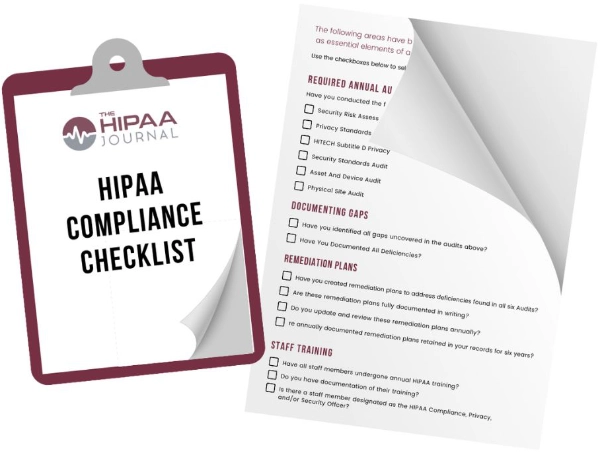
HIPAA Compliance Checklist
Immediate Delivery of Checklist Link To Your Email Address
Please Enter Correct Email Address
Your Privacy Respected
HIPAA Journal Privacy Policy
Get The FREE
HIPAA Compliance Checklist
Immediate Delivery of Checklist Link To Your Email Address
Please Enter Correct Email Address
Your Privacy Respected
HIPAA Journal Privacy Policy