

Steve Alder



294,000 Allegheny Health Network Patients Affected by Business Associate Cyberattack
Allegheny Health Network (AHN), a Pittsburgh-based 14-hospital academic medical system, has announced a significant data breach involving unauthorized access to patient data at one of its business associates. The attack occurred at IntraSystems LLC, a third-party firm contracted to host, manage, and secure certain computer systems used by AHN’s subsidiary Home Medical Equipment and Home Infusion companies. IntraSystems notified ALN about the cyberattack on November 19, 2024, with its internal investigation confirming that hackers first accessed systems containing patient data on October 11, 2024. The attack only affected limited systems, not ALN’s entire patient database. Approximately 293,900 home care patients who received AHN’s Home Medical Equipment and Home Infusion therapy services were affected and had some of their protected health information accessed or stolen in the incident. ALN has confirmed that some patient data was exfiltrated from the systems managed by IntraSystems. When the breach was detected, the affected systems were immediately taken offline to prevent...

Dr. Dorothy Fink Appointed as Acting HHS Secretary
On January 20, 2025, President Trump appointed Dr. Dorothy Fink as Acting Secretary of the Department of Health and Human Services (HHS). Dr. Fink is board-certified in endocrinology, internal medicine, and pediatrics and a nationally certified menopause practitioner and expert on estrogen, diabetes, and bone health. Dr. Fink has practiced at the Hospital for Special Surgery, New York Presbyterian Hospital, and Cornell University. Dr. Fink was appointed as Deputy Assistant Secretary for Women’s Health during the previous Trump Administration in 2018 and has served for several years as Director of the HHS’ Office on Women’s Health, where she has led a wide-ranging collaborative effort with hospitals to improve maternal health. Fink takes over the $1.7 trillion government agency from President Biden’s HHS Secretary, Xavier Becerra. Following her appointment, Fink issued a statement confirming some of the priorities of the HHS’ Office for Civil Rights regarding the protection of rights of conscience and religious freedom and state funding of abortion procedures. OCR has been...

Sen. Warren Seeks Answers from RFK Jr. Ahead of Potential Appointment as HHS Secretary
Sen. Elizabeth Warren (D-MA) has written to Robert F. Kennedy Jr. seeking answers about his plans for HHS policies and the HIPAA regulations should he be confirmed as the new Secretary of the Department of Health and Human Services (HHS). Sen. Warren has publicly stated her opposition to the appointment of RFK Jr. as Secretary of the HHS, stating his appointment poses a danger to public health, scientific research, medicine, and health care coverage for millions of Americans. “RFK Jr. wants to stop parents from protecting their babies from measles and his ideas would welcome the return of polio,” said Sen. Warren in response to President Trump’s nomination of RFK Jr. for HHS Secretary. “He has spread conspiracy theories on everything from COVID to mass shootings. I will have a lot of questions about Mr. Kennedy’s fitness to serve as health secretary when he appears before the Finance Committee.” Sen. Warren does have a lot of questions, 175 of which were included in the 34-page letter requesting answers be provided promptly after the Senate Finance Committee hearing. While some of...
HIPAA Privacy Laws
The Objectives of the HIPAA Privacy Laws The HIPAA privacy laws were first enacted in 2002 with the objective of protecting the confidentiality of patients´ healthcare information without handicapping the flow of information that was required to provide treatment. The HIPAA privacy laws control who can have access to Protected Health Information (PHI), the conditions under which it can be used, and who it can be disclosed to. Use this article as a guide in conjunction with our free HIPAA Law Checklist which you can request using any form on this page. The HIPAA privacy laws not only apply to healthcare providers and the organizations they work for. The laws apply to any entity that may have access to healthcare information about a patient that – if it were to fall into the wrong hands – could present a risk of harm to the patient´s finances or reputation. Therefore health insurers, healthcare clearing houses and employers that provide in-house health plans also have HIPAA compliance obligations. The Information Protected by the HIPAA Privacy Laws The information...
States Challenge HIPAA Privacy Rule Update Strengthening Reproductive Health Information Privacy
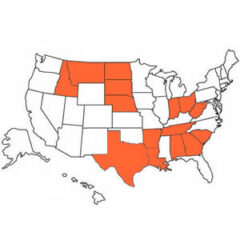
A complaint has been filed in the U.S. District Court for the Eastern District of Tennessee in Knoxville led by Tennessee Attorney General Jonathan Skrmetti challenging the legality of the update to the HIPAA Privacy Rule enacted by the Department of Health and Human Services to strengthen reproductive health information privacy. The lawsuit names 14 other states as plaintiffs – Alabama, Arkansas, Georgia, Idaho, Indiana, Iowa, Louisiana, Montana, Nebraska, North Dakota, Ohio, South Carolina, South Dakota, and West Virginia. Texas is pursuing its own legal challenge against the update to the HIPAA Privacy Rule. The HHS issued the HIPAA Privacy Rule Final Rule to Support Reproductive Health Care Privacy (Final Rule) in response to the Supreme Court’s decision in Dobbs v. Jackson Women’s Health Organization that led to state abortion bans and other restrictions on reproductive freedom in 21 states. There were legitimate concerns that states with bans on abortions may attempt to take legal action against individuals who travel out of state to obtain lawful abortions in states with...

Get The FREE
HIPAA Compliance Checklist
Immediate Delivery of Checklist Link To Your Email Address
Please Enter Correct Email Address
Your Privacy Respected
HIPAA Journal Privacy Policy
Get The FREE
HIPAA Compliance Checklist
Immediate Delivery of Checklist Link To Your Email Address
Please Enter Correct Email Address
Your Privacy Respected
HIPAA Journal Privacy Policy




