Steve Alder



Tift Regional Health System Pays $1.2 Million to Settle Data Breach Lawsuit
Tift Regional Health System Inc, a non-profit health system serving patients in south central Georgia, has agreed to pay $1.2 million to settle a class action lawsuit stemming from a 2022 cyberattack that exposed patient data. Tift Regional Health, which operates as Southwell, Inc., which is also a defendant, identified suspicious activity within its computer network on or around August 16, 2022. The forensic investigation confirmed that its network was accessed by an unauthorized third party between August 11, 2022, and August 17, 2022. The compromised parts of the network contained documents that included patient names, birth dates, Social Security numbers, and a range of sensitive medical information. Tift Regional Health said those documents may have been accessed or copied in the attack. A ransomware group – Hive – claimed responsibility for the attack. Hive claimed to have stolen 1 terabyte of data and proceeded to leak some of that data on its data leak site. The data breach was reported to the HHS’ Office for Civil Rights as involving the protected health...

DAP Health Settles Data Breach Lawsuit for $1,300,000
DAP Health, a nonprofit community healthcare network based in Southern California, has agreed to settle a class action lawsuit that was filed in response to a cyberattack on its computer systems that exposed sensitive patient data. Suspicious activity was identified within certain computer systems on or around July 22, 2024. An investigation was launched, which confirmed that an unauthorized third party gained access to an email server and exfiltrated emails and files containing personally identifiable information and protected health information. Data stolen in the incident included names, contact information, dates of birth, Social Security numbers, driver’s license numbers, passport numbers, birth certificate numbers, vehicle license plate and VIN numbers, financial account numbers, Medicare/Medicaid numbers, health insurance information, and a range of medical information. Notification letters started to be sent to the affected individuals in December 2024, and the breach was reported to the HHS’ Office for Civil Rights as involving the protected health information of 129,048...

What is Information Blocking in Healthcare?
Information blocking in healthcare is any practice by a healthcare provider, certified health IT developer, or Health Information Network (collectively “actors” ) that prevents or materially discourages access to, exchange of, or use of Electronic Health Information (EHI). Actors responsible for information blocking can face significant sanctions. In 2016, §4004 of the 21st Century Cures Act added a new section to the Public Health Service Act to prohibit the practice of information blocking in healthcare. The new section describes some of the most common information blocking practices, and instructs the Secretary of Health and Human Services (HHS) to identify exceptions when information blocking in healthcare is permissible. HHS did so through the 2020 Cures Act Final Rule, which codified the information blocking provisions — including the permitted exceptions — at 45 CFR Part 171. The new section also authorizes HHS’ Office of Inspector General (HHS OIG) and the Office of the National Coordinator for Health Information Technology (ONC) to sanction “actors” found responsible for...

Medusa Ransomware Group Has Attacked 500+ Critical Infrastructure Orgs
CISA, the Department of Health and Human Services (HHS), and the Federal Bureau of Investigation (FBI) have issued an updated cybersecurity advisory about the Medusa ransomware-as-a-service (RaaS) group, which has now claimed more than 500 critical infrastructure victims. When the cybersecurity advisory was first issued in March 2025, the authorizing agencies determined that Medusa had conducted more than 300 attacks on critical infrastructure entities between 2021 and February 2025. The Medusa ransomware operation emerged in June 2021 and initially operated as a closed ransomware group, with the developers conducting all aspects of the operation, including development, ransomware campaigns, and ransom negotiations. In early 2023, Medusa morphed into a RaaS operation, using affiliates to conduct attacks for a percentage of the ransom payments. The group also launched a data leak site in 2023 and adopted double extortion tactics, issuing threats to publish stolen data to pressure victims into paying to prevent data leaks as well as to obtain the keys to decrypt data. Since the...

Free Webinar Recording: Inside 250 HIPAA Investigations – What You Need to Know
Learn exactly what happens during a HIPAA investigation. Understand where organizations fail so you can avoid government fines and drawn-out investigations. Based on real experience from over 250 actual OCR investigations. When it comes to HIPAA investigations, many organizations lean on the hope that they will never be implicated. But, with the rise of ransomware breaches and patient complaints, your organization is much more likely to end up in the crosshairs of the Office for Civil Rights (OCR) than you might expect. While you can’t always prevent breaches from occurring, you can control your preparedness for everything that follows when it comes to your HIPAA compliance posture. Join Jake Dewberry, Chief Legal Officer, and Ryan Boudreau, Senior Vice President of Operations from Abyde, as they walk through the details of what an investigation actually looks like and where organizations fail based on their experience in over 250 OCR investigations. They will be sharing real (redacted) examples from past investigations, detailing what the OCR asks for, how to respond safely, and...

Get The FREE
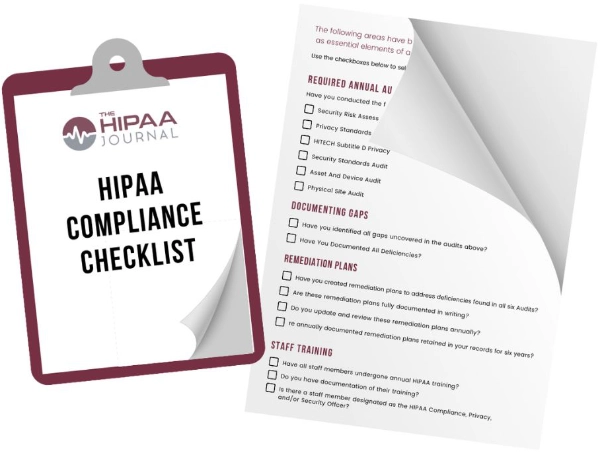
HIPAA Compliance Checklist
Immediate Delivery of Checklist Link To Your Email Address
Please Enter Correct Email Address
Your Privacy Respected
HIPAA Journal Privacy Policy
Get The FREE
HIPAA Compliance Checklist
Immediate Delivery of Checklist Link To Your Email Address
Please Enter Correct Email Address
Your Privacy Respected
HIPAA Journal Privacy Policy