Steve Alder


HIPAA Compliance and Healthcare Information
Storing and Communicating Healthcare Information in Compliance with HIPAA When the Final Omnibus Rule enacted regulations within the Health Insurance Portability and Accountability Act (HIPAA) in 2013, it raised issues for healthcare organizations and other covered entities about HIPAA compliance and healthcare information storage and communication. In a healthcare environment in particular, the increased use of mobile devices in the workplace has driven efficiency and accelerated communications. However the new regulations concerning storing and communicating healthcare information in compliance with HIPAA effectively mean that “traditional” channels of mobile communication – such as email and SMS – are no longer considered secure. The Significance of the HIPAA Security Rule Most of the relevant legislation regarding HIPAA compliance and healthcare information is contained within the HIPAA Security Rule. The HIPAA Security Rule includes specific physical, technical and administrative safeguards to prevent healthcare information from being compromised when it is at rest...

Staten Island Health Center to Pay $195,000 to Terminated Whistleblower
A Staten Island health center must pay $195,000 in damages and back wages to an employee who was terminated after refusing an in-person meeting during the COVID-19 pandemic out of safety concerns. The incident occurred in March 2020 when cases of COVID-19 started soaring. A Community Health Center of Richmond employee was due to attend a regularly scheduled meeting and requested the meeting be held virtually rather than in person due to the risk of infection. The meeting was due to be held in a windowless room at the health center. The employee changed the format of the meeting to teleconference; however, when the CEO insisted that it must be held in person, the employee changed the format back to in-person and then didn’t attend. The employee was suspended two days later for refusing to attend the meeting and other insubordination, and in April 2020, the employee was terminated without further explanation. In response, the employee filed a complaint with the Occupational Safety and Health Administration under the whistleblower protections of the Occupational Safety and Health Act,...

HIPAA Compliant Email Marketing
The rules for HIPAA compliant email marketing are complex, subject to multiple exceptions, and can be interpreted in a number of ways depending on the purpose of the marketing email, its content, and whether it even qualifies as a marketing email under HIPAA. Regardless of how the rules are interpreted, the platform used to send HIPAA compliant marketing emails must meet specific security requirements. According to §164.508 of the HIPAA Privacy Rule, a covered entity (or business associate “where provided” by §160.102) must obtain a valid HIPAA authorization “for any use or disclosure of Protected Health Information (PHI) for marketing”. This standard could be interpreted by some sources as implying that covered entities must obtain a valid HIPAA authorization from every intended recipient before sending a marketing email that disclosures their email address. However, this is not the case. Some forms of marketing are not covered by HIPAA, some marketing emails are exempt from the definition of marketing under HIPAA, and some types of marketing emails do not use or disclose PHI...

Is Stripe HIPAA Compliant?
Stripe is not HIPAA compliant and – other than its payment processing services – should not be used by covered entities and business associates to create, collect, store, or transmit Protected Health Information (PHI). Stripe does not need to comply with HIPAA for payment processing services due to HIPAA exempting financial transactions from the requirements of the Administrative Simplification Regulations. Despite the exemption, businesses may be restricted in how they can use the payment processing services due to Stripe’s Terms and Conditions. What is Stripe? Stripe is primarily a payment processing platform that enables businesses to collect payments from a customer via a wide range of payment options (credit card, ACH transfer, Apple Pay, Bitcoin, etc.). Businesses can integrate the Stripe API into an online store or app, subscribe to a plan that supports in-person card processing, and/or purchase card readers with tap to pay capabilities. As well as its payment processing activities, Stripe provides billing, identity verification, and fraud management services. The company...

Increase Staff Productivity & Reduce No-Shows With Better Patient Engagement
Healthcare organizations of any size can streamline workflows, increase staff productivity, maximize revenue and reduce no-shows by up to 90% as benefits of patient engagement technology. Patient-centric functionality enhances patient communications with automation, including appointment notification and reminders, online patient scheduling, waitlist management with last-minute cancellation fulfilment, patient experience surveys, and many other features. These can significantly enhance your patients’ perception and experience of your practice. Typically, HIPAA compliant patient engagement systems integrate easily with all existing practice management software and have a fast return-on-investment. Surveys Show Patients Appreciate Patient Engagement Technology Healthcare providers have been slow to adopt communication technology, but according to an Accenture Survey, 60% of patients prefer to use technology for patient-provider communication. This is in part because the Covid crisis altered patient behaviors and expectations of technology usage in healthcare practices. Patients...

Get The FREE
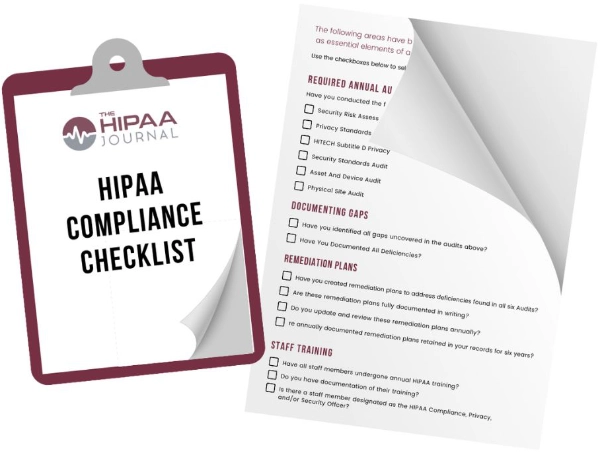
HIPAA Compliance Checklist
Immediate Delivery of Checklist Link To Your Email Address
Please Enter Correct Email Address
Your Privacy Respected
HIPAA Journal Privacy Policy
Get The FREE
HIPAA Compliance Checklist
Immediate Delivery of Checklist Link To Your Email Address
Please Enter Correct Email Address
Your Privacy Respected
HIPAA Journal Privacy Policy