Steve Alder



12 Million Medical Laboratory Records Exposed Online
Hackers can exploit unpatched vulnerabilities and trick employees into providing access, but sometimes huge amounts of sensitive health information are much easier to obtain, as security researcher, Jeremiah Fowler, recently confirmed. One of India’s largest diagnostic centers, Noida, Uttar Pradesh-based Redcliff Labs, serves more than 2.5 million individuals in more than 220 Indian cities and provides a wide range of diagnostic testing services. Fowler found an unsecured Redcliff Labs database that contained the medical test results of more than 12 million individuals. The database had been exposed on the Internet and could be accessed without a password using a web browser, and the contents could be viewed using an open—source viewer or the native viewer provided by the cloud service provider. The 7-terabyte database contained 12,347,297 records that included the names of patients and physicians, the location where the test was performed, test results, and other sensitive data, and a database folder was identified that contained more than 6 million PDF documents of test results....
PHI of University of Michigan Health Service and School of Dentistry Patients Exposed
The University of Michigan (UM) has recently announced it fell victim to a cyberattack in the summer that resulted in unauthorized access to the sensitive data of students, applicants, alumni, donors, employees, contractors, University Health Service and School of Dentistry patients, and research study participants. UM detected suspicious activity within its computer network on August 23, 2023, and took immediate action to contain the incident and prevent further unauthorized access. Third-party cybersecurity experts were engaged to assist with the investigation and confirmed that an unauthorized third party had access to its network between August 23, 2023, and August 27, 2023. A review was conducted to identify files that may have been accessed and the types of data involved. The exposed data varied from individual to individual and may have included the following: Students, applicants, alumni, donors, employees, and contractors: Name, Social Security number, driver’s license or other government-issued ID number, financial account or payment card number, and/or health...
AI Can Save Phishers 2 Days Per Campaign
Concern is growing about the use of generative artificial intelligence (AI) models for malicious purposes. Security researchers have demonstrated that generative AI can write code for polymorphic malware and create convincing lures for phishing emails and the the guardrails put in place to prevent generative IT tools such as ChatGPT from being used for malicious purposes can be easily circumvented. Further, alternative tools such as WormGPT and FraudGPT are available specifically for use by cybercriminals. What is largely unknown is to what extent cybercriminals are taking advantage of generative AI. Mandiant has found evidence to suggest that cybercriminals have been using generative AI, although only for limited purposes such as phishing, business email compromise (BEC) attacks, and image manipulation to defeat know-your-customer (KYC) requirements AI and Social Engineering Experts Go Head-to-Head Researchers at IBM Security’s X-Force Red team have shown how effective generative AI tools are at generating convincing phishing emails that appear to have been written by humans. So...
CISA & HHS Release Healthcare Cybersecurity Toolkit
The Cybersecurity and Infrastructure Security Agency (CISA) and the Department of Health and Human Services (HHS) have collaborated and produced a cybersecurity toolkit for the U.S. healthcare and public health (HPH) sector. The toolkit consolidates key resources such as CISA’s Cyber Hygiene Services, the HHS Health Industry Cybersecurity Practices, and the HHS and Health Sector Coordinating Council’s (HSCC) HPH Sector Cybersecurity Framework Implementation Guide. The toolkit includes resources, tools, training material, and information for HPH sector organizations at every level, from fundamental cybersecurity hygiene best practices to advanced and complex cybersecurity tools for strengthening security posture and keeping up to date on current and emerging threats. The toolkit was released ahead of a roundtable discussion co-hosted by CISA and the HHS on the threats faced by the U.S. healthcare sector and to identify ways that the federal government and the healthcare industry can work together to close gaps in resources and cyber capabilities. Cyberattacks on hospitals and health...
Cyberattacks Reported by Brooklyn Premier Orthopedics & Atlas Healthcare
Brooklyn Premier Orthopedics (BPO) in New York has confirmed the protected health information of 48,459 patients may have been viewed or obtained in a recent cyberattack. According to BPO’s October 5, 2023, breach notice, unauthorized individuals gained access to parts of its network where patient data was stored, including names, addresses, dates of birth, Social Security numbers, and medical treatment information. The investigation did not uncover any evidence to indicate any of that information has been misused; however, the affected patients have been advised to be vigilant and monitor their accounts carefully. Complimentary credit monitoring and identity theft protection services have been offered. BPO has reviewed and enhanced its security policies and practices to reduce the likelihood of similar incidents occurring in the future. Almost 11,000 Atlas Healthcare Residents and Patients Affected by Cyberattack The Connecticut senior living and care provider, Atlas Healthcare, has warned 10,831 of its assisted living residents and rehabilitation patients that some of their HIPAA...

Get The FREE
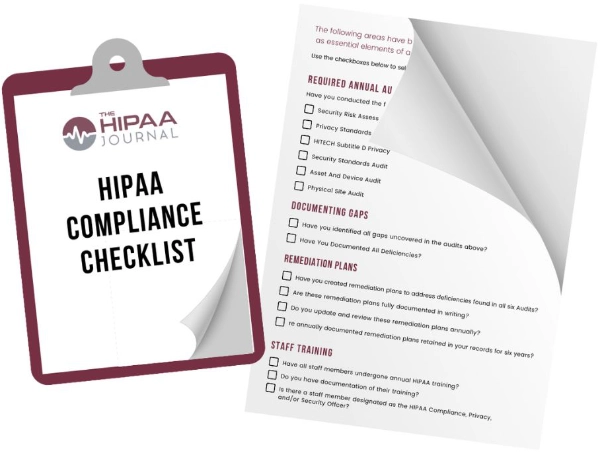
HIPAA Compliance Checklist
Immediate Delivery of Checklist Link To Your Email Address
Please Enter Correct Email Address
Your Privacy Respected
HIPAA Journal Privacy Policy
Get The FREE
HIPAA Compliance Checklist
Immediate Delivery of Checklist Link To Your Email Address
Please Enter Correct Email Address
Your Privacy Respected
HIPAA Journal Privacy Policy