

Steve Alder



When Should the OSHA Annual Summary be Posted?
The OSHA annual summary should be posted in a conspicuous place (or places) where notices to employees are customarily posted no later than February 1 of the year following the year covered by the summary. This article explains what the OSHA annual summary is, who is required to post a summary, and what the summary should include. What is the OSHA Annual Summary? Who is Required to Post a Summary? What Should the Summary Include? Who Certifies the Summary is Accurate? How Long Must a Summary Remain Posted? Conclusion: Be Aware of the Posting Requirements What is the OSHA Annual Summary? The OSHA annual summary is a form (Form 300A or equivalent) that summarizes the recordable work-related injuries and illnesses that occurred during the previous calendar year. The summary has to be completed by all employers unless exempted due to the size of the business or the nature of activities. Note: Exemption from the posting requirements does not exempt an employer from reporting a workplace incident that results in a fatality or severe injury. “Covered employers” – i.e., those required to...
Largescale Phishing Campaign Targets Zimbra Collaboration Email Servers
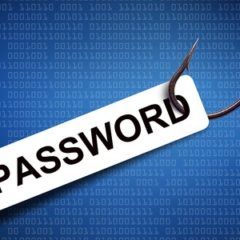
Researchers at ESET have identified a largescale and ongoing phishing campaign targeting Zimbra Collaboration email servers at small- and medium-sized businesses and government agencies. The campaign has been active since at least April and is being conducted globally, with Poland, Ecuador, and Italy the most targeted countries. The campaign does not appear to be targeted on any specific vertical. Targets are sent an email with an HTML attachment. The email warns the user about an email server update or another Zimbra issue, such as a security update. The From field indicates the email has been sent by an email server administrator. The user is told that they need to download the HTML attachment, which will have a URL pointing to a local file patch. The HTML attachment includes the targeted organization’s logo, the organization’s name, and a fake login page, with the username prefilled. The user is only required to enter their password. If the password is entered, the credentials are transmitted by HTTPS POST request to an adversary-controlled server. The ESET researchers observed...
Morris Hospital & Healthcare Centers Notifies Almost 249,000 Patients About April Cyberattack
Morris Hospital & Healthcare Centers in Illinois has started notifying 248,943 individuals about a cyberattack that was detected on April 4, 2023. When the breach was detected, third-party cybersecurity experts were engaged to investigate and determine the nature and scope of the incident and confirmed that files containing protected health information had been exfiltrated from its systems by unauthorized individuals. The stolen files included the protected health information of current and former patients, employees, and their dependents and beneficiaries, including names, addresses, dates of birth, Social Security numbers, medical record numbers, account numbers, and diagnostic/treatment codes. While there has been no detected misuse of the stolen data, affected individuals have been advised to be cautious and take advantage of the complimentary identity theft resolution services that have been offered. Morris Hospital & Healthcare Centers did not state the identity of the attackers in the notification letters, nor mention the nature of the attack. The HIPAA Journal can...
CentroMed Notifies 350,000 Individuals About PHI Exposure
El Centro Del Barrio, doing business as CentroMed in San Antonio, TX, has alerted 350,000 patients that some of their protected health information was potentially compromised in a hacking incident that was detected on June 12, 2023. The forensic investigation confirmed that some of its IT systems were accessed by unauthorized individuals on June 9, 2023, and access to files containing protected health information was confirmed and data theft could not be ruled out. The affected files contained the information of current and former patients, employees, and employee and provider spouses, partners, and dependents. The affected patient data included names, addresses, dates of birth, Social Security numbers, financial account information, medical record numbers, health insurance plan member IDs, and claims data (including any diagnoses listed on claims). Employee and spouse/partner/dependent information data included names, Social Security numbers, financial account information, health insurance plan member IDs, and claims data. The affected individuals started to be notified by mail on...

July 2023 Healthcare Data Breach Report
There was a 15.2% fall in reported data breaches in July with 56 breaches of 500 or more records reported to the HHS’ Office for Civil Rights (OCR), which makes July an average month for data breaches. Over the past 12 months, 57 breaches have been reported each month on average; however, July was not an average month in terms of the number of compromised records. There was a 261% month-over-month increase in breached records in July, with 18,116,982 records breached across the 56 reported incidents. The incredibly high total was due to a major data breach at HCA Healthcare that saw the records of 11,270,000 individuals compromised. The figures this month bring the running breach total for 2023 up to 395 incidents, across which the records of 59,569,604 individuals have been exposed or stolen. The average breach size for 2023 is 150,809 records and the median breach size is 4,209 records. Over the past 12 months, more than 81.76 million records have been breached across 683 incidents. Largest Healthcare Data Breaches Reported in July HCA Healthcare is a Nashville, TN-based health...

Get The FREE
HIPAA Compliance Checklist
Immediate Delivery of Checklist Link To Your Email Address
Please Enter Correct Email Address
Your Privacy Respected
HIPAA Journal Privacy Policy
Get The FREE
HIPAA Compliance Checklist
Immediate Delivery of Checklist Link To Your Email Address
Please Enter Correct Email Address
Your Privacy Respected
HIPAA Journal Privacy Policy




