Steve Alder


Study Reveals State of External Exposure Management
CyCognito has published its latest State of External Exposure Management Report, which highlights the extent to which vulnerabilities affect organizations and how easy it is for hackers to exploit those vulnerabilities. For the report, CyCognito’s researchers aggregated and analyzed 3.5 million digital assets across its customer base between June 2022 and May 2023, which includes small, medium, and large enterprises, including Fortune 500 companies. The study found that 70% of web applications had severe security gaps, such as lacking web application firewall (WAF) protection and not using encrypted connections such as HTTPS, with 25% of web applications lacking both protections. A typical enterprise has more than 12,000 web apps such as APIs, SaaS applications, databases, and servers. The researchers found at least 30% of those web apps have more than 3,000 assets and had at least one exploitable or high-risk vulnerability. The study confirmed the extent to which personally identifiable information (PII) is put at risk. 74% of assets containing PII were found to be exposed to at...
Lawsuit Alleges Unum Group at Fault for MOVEit Data Breach
A Florida resident is taking legal action against the employee benefits provider, Unum Group, over its MOVEit Transfer data breach and alleges a failure to safeguard the personal information stored within its network. Unum Group was one of hundreds of victims of the mass exploitation of a zero-day vulnerability in the MOVEit Transfer solution. Progress Software issued a security alert about the vulnerability on May 31, 2023, and released a patch the same day; however, the vulnerability had already been exploited in attacks by the Clop group, resulting in the theft of sensitive data. Unum Group announced on August 3, 2023, that it had been affected and there had been unauthorized access to the protected health information of former and current customers of its subsidiary insurance companies, including names, birth dates, addresses, Social Security numbers, and health insurance claim information. The breach was reported to the HHS’ Office for Civil Rights as affecting 531,732 individuals. The lawsuit argues that Unum Group had an obligation to keep consumers’ data private and...

Why is OSHA Necessary?
OSHA is necessary because it creates a “federal floor” of safety and health standards in all workplaces and because the adoption and enforcement of safety and health standards has significantly reduced fatalities, injuries, and illnesses in the workplace. Additionally, OSHA’s Outreach Training programs have increased awareness of workplace hazards, how to recognize them, and how to avoid them. OSHA, established by the OSH Act, came into being in 1971 to address increasing workplace injuries, illnesses, and fatalities. Since the Administration was formed, OSHA has reportedly reduced workplace injuries and illnesses by 40% and fatalities by 60%. OSHA’s primary goal is to reduce human and economic costs associated with preventable workplace accidents and illnesses. OSHA’s initial standards were adopted from existing safety guidelines from organizations such as the National Fire Protection Administration. Compliance with OSHA standards was initially voluntary but was later amended to penalize repeat offenders and companies knowingly placing workers at risk. OSHA...

Medical Records from Prospect Ransomware Attack Appear on Dark Web
Medical records extracted during the recent Prospect Medical Holdings ransomware attack are being allegedly offered for sale on the dark web according to social media sources. The notification of the sale has been interpreted as a signal to Prospect Medical Holdings to quickly respond to the hackers’ ransom demands. On August 3, the Prospect Medical Holdings health system was hit by a ransomware attack that crippled operations at the health system’s 17 hospitals and 166 outpatient clinics. At the time, the perpetrators of the attack were unknown. However, last week, a notice appeared on the Rhysida dark leak site, claiming responsibility for the attack. The notice also announced an auction of data hacked in the attack – the data consisting of more than 500,000 Social Security Numbers, passports of clients and employees, drivers’ licenses, patient files (profiles and medical histories), financial and legal documents. In all, it is claimed, the sale consists of 1TB of unique files and a 1.3TB SQL database. The notice was accompanied by several snapshots of the stolen data – some of...

Judge Questions Whether Website Metadata is Regulated by HIPAA
The HHS’ Office for Civil Rights released guidance in 2022 on HIPAA and website tracking technologies and confirmed disclosures of protected health information to third parties via website tracking technologies is a HIPAA violation unless authorization has been received from patients or if there is a valid business associate agreement in place. OCR and the Federal Trade Commission also wrote to 130 healthcare and telehealth providers to warn them about tracking technologies on their websites and OCR has made HIPAA violations related to website tracking tools an enforcement priority. However, OCR’s interpretation that metadata is regulated under the Health Insurance Portability and Accountability Act has been questioned by an Illinois court in a ruling on a class action lawsuit that was filed against a healthcare provider over the disclosure of patient data via website tracking technologies. The lawsuit – Marguerite Kurowski and Brenda McClendon v. Rush System for Health d/b/a Rush University System for Health – was filed in District Court for the Northern District of...

Get The FREE
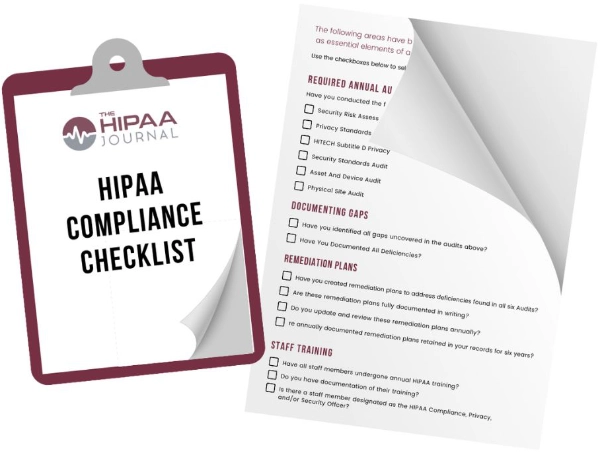
HIPAA Compliance Checklist
Immediate Delivery of Checklist Link To Your Email Address
Please Enter Correct Email Address
Your Privacy Respected
HIPAA Journal Privacy Policy
Get The FREE
HIPAA Compliance Checklist
Immediate Delivery of Checklist Link To Your Email Address
Please Enter Correct Email Address
Your Privacy Respected
HIPAA Journal Privacy Policy