Steve Alder


Vanderbilt University Medical Center Investigated by OCR over Disclosure of Transgender Patients’ Medical Records
Vanderbilt University Medical Center is being investigated by the Department of Health and Human Services’ Office for Civil Rights (OCR) over the disclosure of the medical records of transgender patients to Tennessee Attorney General, Jonathan Skrmetti. VUMC provided the medical records of transgender patients to AG Skrmetti after receiving civil investigative demands for the data as part of an investigation into potential medical billing fraud. VUMC recently sent notifications to the affected patients informing them about the disclosure of their records, which started to be provided to AG Skrmetti in December last year. The HIPAA Privacy Rule permits, but does not require, healthcare providers to disclose patients’ medical records for law enforcement purposes in certain circumstances, such as in response to an administrative request if the information being sought is relevant and material to a legitimate law enforcement inquiry. VUMC and AG Skrmetti both maintain that the disclosures were legal. AG Skrmetti said the records were requested in response to a run-of-the-mill...

59% Year-over-year Increase in Exploitable Vulnerabilities in Medical Devices
A joint research project by Health-ISAC, Finite State, and Securin has revealed exploitable vulnerabilities in medical devices have increased by almost 60% since 2022. The researchers identified almost 1,000 vulnerabilities in 966 medical products, which is a 59% year-over-year increase from 2022. 993 vulnerabilities were identified that could be exploited by malicious actors to gain access to healthcare networks, 160 of the identified vulnerabilities have already been weaponized, and a further 101 are trending in the wild. Advanced Persistent Threat (APT) actors are known to be actively exploiting 9 of the vulnerabilities, and 7 are being actively exploited by ransomware gangs. A recent study by Akamai found cybercriminal groups, and ransomware gangs in particular, are increasingly exploiting vulnerabilities in software, firmware, and operating systems to gain initial access to networks. Threat actors are devoting resources to in-house research to identify zero-day vulnerabilities in software solutions that can be mass exploited in attacks. The Clop threat group, for example,...

Even Well-Defended Companies are Vulnerable to Lapsus$ Attacks
The Cyber Safety Review Board (CSRB) has published an analysis of cyberattacks by the Lapsus$ threat group and has made recommendations for the public and private sectors on how to improve cybersecurity defenses against attacks by Lapsus$ and similar threat actors. The CSRB was established by President Biden’s Executive Order on Improving the Nation’s Cybersecurity and has been tasked with reviewing major cyber events and making recommendations on improvements that can be made by public and private sector organizations to better defend against attacks. The CSRB consists of 15 cybersecurity leaders from the federal government and private sector and is chaired by Robert Silvers, Under Secretary for Policy at the U.S. Department of Homeland Security. Lapsus$ is a cyber threat actor primarily focused on data theft and extortion and has been conducting attacks globally on large companies and government agencies around the world since 2021. The group breaches defenses to gain access to internal networks, steals sensitive data such as source code, and demands payment, although rarely...
Dentist Ordered to Pay $20,000 After Terminating Whistleblower for Raising Health and Safety Concerns
A Peoria, AZ-based dentist has been ordered to pay $20,000 in back wages to an employee who was terminated for making allegations of unsafe work practices at the practice. The Occupational Safety and Health Act (OSH Act) has whistleblower provisions that protect employees from retaliation after raising concerns about workplace health and safety issues and reporting injuries sustained in the workplace. Employers are not permitted to take unfavorable employment actions against employees, such as demoting, denying overtime or promotion, disciplining, intimidating, making threats, or firing employees who raise safety concerns with their employers or report safety and health complaints to the Occupational Safety and Health Administration (OSHA). In March 2020, a dental assistant at the practice of Dr. Monzer K. Al-Dadah LLC and Dr. Al-Dadah filed a complaint with OSHA about unsafe working practices related to COVID-19. The employee complained about the risk of contracting COVID-19 and refused a work assignment due to fears of contracting COVID-19. The worker also discussed workplace...
NIST Releases Draft Version of Cybersecurity Framework 2.0 for Public Comment
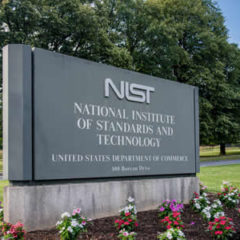
The National Institute of Standards and Technology (NIST) has published a draft version of an updated version of its popular Cybersecurity Framework (CSF) – version 2.0. This is the first major update to the NIST CSF since its release in 2014. The NIST CSF helps organizations to understand and reduce cybersecurity risks, improve their security posture, and monitor progress, and has been downloaded more than 2 million times. The NIST CSF was initially released to help critical infrastructure entities improve their security posture and reduce and manage risks; however, the framework has been adopted by a much broader range of entities such as small- and medium-sized organizations that lack internal resources for cybersecurity. The framework is based on five key pillars: identity, protect, detect, respond, and recover, and provides high-level guidance for managing cybersecurity risk. The framework uses a common language and systematic methodology for managing risk and aiding communication between technical and non-technical staff and can easily be tailored to suit the needs of...

Get The FREE
HIPAA Compliance Checklist
Immediate Delivery of Checklist Link To Your Email Address
Please Enter Correct Email Address
Your Privacy Respected
HIPAA Journal Privacy Policy
Get The FREE
HIPAA Compliance Checklist
Immediate Delivery of Checklist Link To Your Email Address
Please Enter Correct Email Address
Your Privacy Respected
HIPAA Journal Privacy Policy