

Steve Alder


FTC and HHS Update Online Compliance Tool for Mobile Health App Developers
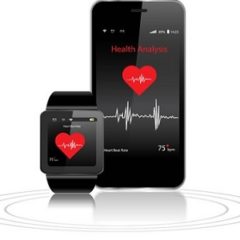
Developers of mobile health apps may be required to comply with certain federal laws such as the FTC Act, FTC Health Breach Notification Rule, Children’s Online Privacy Protection Act (COPPA), Health Insurance Portability and Accountability Act (HIPAA), Federal Food, Drug and Cosmetics Act (FD&C Act), the 21st Century Cures Act, and the ONC’s Information Blocking Regulations. To help mobile health app developers avoid compliance missteps, the Federal Trade Commission (FTC), in conjunction with the Department of Health and Human Services’ Office for Civil Rights (OCR), Office of the National Coordinator for Health Information Technology (ONC), and the Food and Drug Administration (FDA), developed an online tool to help developers determine which federal laws and regulations they need to comply with. The online tool asks a series of questions about the nature of the app, the service it provides, the information it collects, and how that information is collected, shared, and used. Based on the answers to the questions, the tool will direct the developer to the relevant federal...
Guide Released for Assessing and Improving Connected Medical Device Security
The security of medical devices is one of the biggest cybersecurity concerns in healthcare. Hospitals continue to add more connected medical devices and by doing so they significantly increase the attack surface. One recent survey found a strong link between the number of connected medical devices at medical practices and the number of cyberattacks they experience. Connected medical devices often have vulnerabilities that can be exploited, and provide hackers with an easy way to gain access to healthcare networks. New legislation is being considered to force healthcare organizations to make medical device security a priority and to require the manufacturers of medical devices to do more to ensure the security of their devices for their entire lifecycle. For example, the Protecting and Transforming Cyber Health Care (PATCH) Act seeks to amend the Federal Food, Drug, and Cosmetic Act by requiring cybersecurity measures to be included in premarket submissions to demonstrate the safety and effectiveness of the devices throughout the product’s entire lifecycle. Until new legislation is...
New York Ambulance Service Facing Multiple Class Action Lawsuits over Ransomware Attack
The New York ambulance service, Empress EMS, is facing multiple class action lawsuits over a ransomware attack that was detected on July 14, 2022. The Hive ransomware group was behind the attack, and as per the group’s modus operandi, after gaining access to the network, sensitive files were stolen, then files were encrypted. According to the breach notifications sent by Empress EMS, the unnamed ransomware actors stole files that included names, dates of birth, demographic information, diagnosis and treatment information, medical record numbers, dates of service, insurance information, prescription information, and, for a small subset of individuals, Social Security numbers. Those files were stolen on July 13, 2022. The Hive ransomware group published some of the stolen data on their data leak site, but the data was promptly removed. According to the DataBreaches website, which contacted the Hive group, Empress EMS paid the ransom. The breach investigation revealed the ransomware gang first gained access to the network on or around May 26, 2022. Notification letters were sent...
COVID-19 Vaccination Statuses of 500,000 VA Employees have been Impermissibly Disclosed
The COVID-19 vaccination statuses of approximately 500,000 Department of Veterans Affairs employees have been impermissibly disclosed. According to the VA, a spreadsheet containing employee names and their vaccination statuses was placed on SharePoint without appropriate access permissions being set and an email with a link to the spreadsheet was sent on behalf of the Veterans Health Administration (VHA) Healthcare Operations Center to VHA VISN directors, deputy network directors, administrative representatives, central office senior leaders, and healthcare ops controllers. The spreadsheet also included details of claimed religious and medical exceptions to COVID-19 vaccination. The internal investigation conducted by the VA’s Data Breach Response Service concluded the information had been impermissibly disclosed and the spreadsheet was removed from SharePoint. The VA concluded that there was a low risk of misuse of that information. Urology of Greater Atlanta Notifies Almost 80,000 Patients About August 2021 Data Breach In October 2022, Urology of Greater Atlanta in Georgia...

Amazon Ends Support for Third Party HIPAA-Eligible Alexa Skills
Amazon has announced that it will stop support for third-party HIPAA-eligible skills for its Alexa devices, which means developers will no longer be able to create Alexa skills that collect data covered under the Health Insurance Portability and Accountability Act (HIPAA). Amazon launched its HIPAA-compliant Alexa feature in April 2019, with skills added for patients of Atrium Health, Boston Children’s Hospital, Cigna, Express Scripts, Livongo, and Swedish Health Connect. The HIPAA compliance support meant healthcare organizations could use Alexa skills that collected HIPAA-protected data and could transmit that information in a HIPAA-compliant way. The decision has now been taken to end that support. HIPAA-eligible skills are now part of the Alexa Smart Properties for Healthcare business unit, and those skills can only be developed with first-party support. “We regularly review our experiences to ensure we are investing in services that will delight customers. We are continuing to invest heavily in developing healthcare experiences with first and third-party developers, including...

Get The FREE
HIPAA Compliance Checklist
Immediate Delivery of Checklist Link To Your Email Address
Please Enter Correct Email Address
Your Privacy Respected
HIPAA Journal Privacy Policy
Get The FREE
HIPAA Compliance Checklist
Immediate Delivery of Checklist Link To Your Email Address
Please Enter Correct Email Address
Your Privacy Respected
HIPAA Journal Privacy Policy




