

Steve Alder


Humana Members Impacted by Choice Health Data Breach
Humana has recently announced that the protected health information of 22,767 individuals has potentially been compromised in a security incident and data breach at one of its business associates – Choice Health – which Human used to sell Medicare products on its behalf. On May 18, 2022, Choice Health learned that a Choice Health database was accessible over the Internet, with the investigation confirming the misconfiguration was caused by a third-party service provider. An unauthorized individual gained access to the database, removed certain database files, and threatened to publicly release the stolen data. The exposed database was detected by Choice Health on May 14, 2022, with the theft of database files identified on May 18. The unauthorized access and data theft occurred on or around May 7, 2022. Initially, it was thought that the breach was limited to Choice Health lead generation and marketing information; however, further investigations confirmed that the data of some of its carrier partners had also been compromised, including first and last names, Social...
Healthcare Industry Warned About Risk Posed by APT41 Threat Group
The Health Sector Cybersecurity Coordination Center (HC3) has issued a warning about the Chinese state-sponsored threat actor tracked as APT41. The group has been active since at least 2012 and has a history of targeting the healthcare sector, as well as education, high-tech, media, retail, software, pharma, telecoms, video games, travel services, and virtual currencies, with companies in the United States frequently targeted. The group is known to conduct spear phishing, watering hole, and supply chain attacks, and frequently deploys backdoors to give persistent access to victims’ networks. Recently the threat group has been observed using SQL injection for the initial attack and Cobalt strike beacons, which are uploaded in small chunks. The group gains access to networks and gathers intelligence that can be used in future attacks and steals industry-specific information. Once initial access is gained, the group escalates privileges, performs internal reconnaissance using compromised credentials, moves laterally within networks using Remote Desktop Protocol (RDP), stolen...
Cyberattacks Reported by Wolfe Clinic, Reiter Affiliated Companies, & SERV Behavioral Health System
Wolfe Clinic, P.C in Iowa has recently confirmed that it was affected by the data breach at the electronic medical record provider, Eye Care Leaders. The attack exposed the protected health information of 542,776 current and former Wolfe Clinic patients. Wolfe Clinic used the myCare Integrity medical records platform, which was accessed by an unauthorized party on or around December 4, 2021, who deleted databases and system configuration files. A forensic investigation of the security incident was conducted but the deletion of files meant there was a lack of forensic evidence, so it was not possible to determine whether the PHI of Wolfe Clinic patients was accessed or acquired in the attack. Wolfe Clinic said names, addresses, birth dates, Social Security numbers, diagnostic information, and health insurance information were potentially compromised. At the time of issuing notifications, Wolfe Clinic had not received any reports of identity theft and fraud related to the Eye Care Leaders data breach. Affected individuals have been offered 12 months of complimentary credit monitoring...
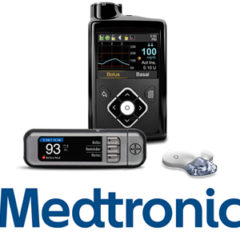
Vulnerability Identified in Medtronic MiniMed 600 Series Insulin Pumps
The Cybersecurity and Infrastructure Security Agency (CISA) and the Food and Drug Administration (FDA) have issued a warning about a recently discovered vulnerability that affects certain Medtronic insulin pumps. The flaw could be exploited by a malicious actor to manipulate patients’ insulin doses, resulting in too much or too little insulin being delivered. The vulnerability affects the following Medtronic NGP 600 Series Insulin Pumps and their accessory components: MiniMed 620G: MMT-1710 MiniMed 630G: MMT-1715, MMT-1754, MMT-1755 MiniMed 640G: MMT-1711, MMT-1712, MMT-1751, MMT-1752 MiniMed 670G: MMT-1740, MMT-1741, MMT-1742, MMT-1760, MMT-1762, MMT-1762, MMT-1780, MMT-1781, MMT-1782 The flaw exists in the communication protocol used by the pump system to pair with other system components. Successful exploitation of the flaw would allow a threat actor to slow or stop insulin delivery or trigger an unintended insulin bolus. The vulnerability cannot be exploited remotely by a threat actor over the Internet but could be exploited within wireless signal proximity to the patient and...
Monkeypox Phishing Campaign Targets Healthcare Providers
A warning has been issued to the healthcare and public health (HPH) sector about an ongoing Monkeypox phishing campaign targeting U.S. healthcare providers that attempts to steal Outlook, Office 365, and other email credentials. Monkeypox is a highly contagious viral disease caused by a virus from the same family as smallpox. According to the Centers for Disease Control and Prevention (CDC), there have been almost 66,000 cases diagnosed globally in the current outbreak, and more than 25,100 cases in the United States. California, New York, Florida, Texas, and Georgia are the worst affected states, with the cases mostly confined to the LBGTQ+ community. Malicious actors often piggyback on major news stories and use these themes to conduct convincing phishing campaigns. Campaigns using monkeypox lures were therefore inevitable, and they are likely to continue and increase in line with the rising numbers of cases. Monkeypox and COVID-19-related phishing campaigns have a high success rate as there is considerable interest in the outbreak and concern about infections. The Health Sector...

Get The FREE
HIPAA Compliance Checklist
Immediate Delivery of Checklist Link To Your Email Address
Please Enter Correct Email Address
Your Privacy Respected
HIPAA Journal Privacy Policy
Get The FREE
HIPAA Compliance Checklist
Immediate Delivery of Checklist Link To Your Email Address
Please Enter Correct Email Address
Your Privacy Respected
HIPAA Journal Privacy Policy




