

Steve Alder


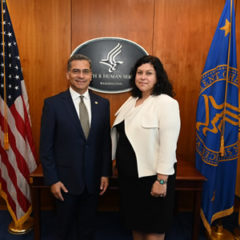
Melanie Fontes-Rainer Appointed Director of the HHS’ Office for Civil Rights
U.S Department of Health and Human Services Director Xavier Becerra has formally sworn in Melanie Fontes Rainer as the new Director of the HHS’ Office for Civil Rights (OCR). Fontes Rainer will lead the department’s enforcement of federal civil rights and HIPAA compliance and will direct the department’s policy and strategic initiatives. Fontes Rainer previously served as Acting Director, replacing Lisa J. Pino who left the post in July 2022 after 11 months as Director. Prior to joining OCR, Fontes Rainer served as Counselor to Secretary Becerra and provided strategy guidance on issues pertaining to civil rights, patient privacy, reproductive health, the Affordable Care Act (ACA), competition in healthcare, equity, and the private insurance market. In that role, she led the implementation of the No Surprises Act, which has helped to improve the transparency of medical billing and save consumers money. Fontes Rainer sits on the White House Task Force on Reproductive Healthcare Access, and recently advised the Secretary and the Administration on how best to respond to the...
Ransomware Attack on Medical Associates of the Lehigh Valley Affects 75K Patients
Medical Associates of the Lehigh Valley in Pennsylvania (MATLV) has announced that it recently fell victim to a sophisticated ransomware attack on its network. The attack was detected on July 3, 2022, and immediate action was taken to contain the attack and prevent further unauthorized access to its network. Third-party forensics specialists were engaged to assist with the investigation and determine the nature and scope of the attack. MATLV said the investigation did not uncover any evidence indicating the misuse of patient information, but parts of the network that were accessed by the attackers contained files that included the protected health information of 75,628 individuals, which may have been viewed or exfiltrated in the attack. The files contained names, addresses, email addresses, birth dates, Social Security numbers, driver’s license numbers, state ID numbers, health insurance provider names, medical diagnoses, treatment information, medications, and lab results. The types of information exposed in the attack varied from patient to patient. Cybersecurity specialists...
Oakbend Medical Center Suffers Ransomware Attack
Over the Labor Day weekend, Oakbend Medical Center in Richmond, TX, suffered a ransomware attack. The attack started on Thursday, September 1, 2022, and saw files on its network encrypted. The medical center said its IT team took all systems offline to contain the attack, and the medical center operated under lockdown procedures while the attack was investigated by the Federal Bureau of Investigation (FBI), the Cyber-Defense Campus CYD), and the Fort Bend County Government Cyberteam. The internal IT team ensured that all patient-centric systems were secured, and cybersecurity experts from Microsoft, Dell, and Malware Protects were engaged to investigate the attack and assess the security of its systems. Once those systems were cleaned, work commenced on rebuilding those systems and restoring them in a controlled and systematic manner. Disruption is continuing to be experienced, and there have been temporary communication issues for patients, vendors, doctors, and administrators; however, at no point was patient safety at risk and the medical center continued to operate. In a...

FBI Warns Healthcare Providers About Unpatched and Outdated Medical Device Risks
The Federal Bureau of Investigation (FBI) has issued a private industry notification warning about the rising number of vulnerabilities in medical devices. If medical devices are not promptly patched and are running out of date software, malicious actors could exploit vulnerabilities and gain access to sensitive patient data or the networks to which the devices connect. With a foothold in the network, threat actors could conduct attacks that adversely impact the operational functions of healthcare facilities. Medical devices are often used to sustain patients with mild to severe medical conditions and attacks on those devices have the potential to cause serious harm to patients and even result in the loss of life. The FBI says vulnerabilities in medical devices predominantly stem from device hardware design and device software management. When medical devices are operated in the default configuration, that often provides threat actors with an opportunity to exploit vulnerabilities. Devices with customized software can be difficult to patch, often requiring specialized procedures,...
HC3 Highlights Privacy and Security Risks Associated with Emerging Technologies
Emerging technologies have the potential to revolutionize the healthcare industry. While there are many potential benefits, these technologies can introduce risks that could threaten patient privacy and safety. If vulnerabilities are not properly addressed, they could be exploited by malicious actors to gain access to sensitive patient data or internal networks, which could threaten patient safety. The Health Sector Cybersecurity Coordination Center (HC3) has drawn attention to some of the most beneficial emerging technologies that have the potential to revolutionize clinical research, the monitoring and delivery of care, communication, data analysis, and data protection, and has highlighted some of the risks associated with these technologies. Artificial intelligence systems can rapidly analyze big data, provide deeper patient insights, and accurately diagnose medical conditions from medical images and data far more quickly than humans, accelerating clinical decisions. While the uses of AI in healthcare are numerous, these systems can introduce risks. AI systems need access to...

Get The FREE
HIPAA Compliance Checklist
Immediate Delivery of Checklist Link To Your Email Address
Please Enter Correct Email Address
Your Privacy Respected
HIPAA Journal Privacy Policy
Get The FREE
HIPAA Compliance Checklist
Immediate Delivery of Checklist Link To Your Email Address
Please Enter Correct Email Address
Your Privacy Respected
HIPAA Journal Privacy Policy




