

Steve Alder



California Legislature Passes Bill Prohibiting the Sharing of Information About Abortions
The Californian legislature has passed a bill (AB-1242) that prohibits companies in the state from complying with warrants from other states that seek access to information about individuals seeking or providing abortions. The decision of the U.S. Supreme Court to overturn Roe v. Wade removed the federal right to obtain an abortion. Several states had trigger laws in place that made abortion illegal in the event of Roe v. Wade being overturned. A dozen states have already made abortion illegal for state residents and several other states are considering implementing similar restrictions. There are fears that legal action could be taken against individuals in those states if they seek access to abortions in other states, and that attempts may be made by state attorneys general and law enforcement to obtain information about individuals seeking abortion in states where abortion remains legal. Under the existing law in California, records of individuals must be provided if a search warrant is issued upon certain grounds. The law change prohibits the issuance of such a warrant related...
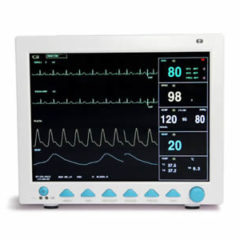
Multiple Vulnerabilities Identified in Contec Health Vital Signs Patient Monitors
Five vulnerabilities have been identified in Contec Health’s CMS8000 CONTEC ICU CCU Vital Signs Patient Monitor. Successful exploitation of the vulnerabilities could allow a threat actor to conduct a denial-of-service attack, access a root shell, make configuration changes, modify firmware, and cause the monitor to display incorrect information. The Cybersecurity and Infrastructure Security Agency (CISA) has issued a security advisory about the vulnerabilities but said Contec Health did not respond to its requests, so healthcare providers that use the affected monitors should contact Contec Health directly for information on how to mitigate the vulnerabilities. The most serious vulnerability – CVE-2022-38100 – has a CVSS v3 severity score of 7.5 and can be exploited remotely by a threat actor with access to the network. Successful exploitation of the vulnerability would cause the device to fail. The flaw can be exploited by sending malformed network data to the device via a specially formatted UDP request. The device would crash and require a reboot. The attack could be conducted...

Can You Send Medical Records by Email?
You can send medical records by email provided the reason for sending medical records is permitted or required by the HIPAA Privacy Rule, and provided the service used to send medical records by email supports compliance with the HIPAA Security Rule. However, exceptions may apply depending on the circumstances. Because medical records contain individually identifiable health information that is considered Protected Health Information (PHI) under HIPAA, members of a covered entity’s or business associate’s workforce can only send medical records by email when the reason for sending medical records by any means is permitted or required by the HIPAA Privacy Rule. Permitted reasons include uses and disclosures of PHI for treatment, payment, and healthcare operations, for public health activities, to employers (for purposes permitted by §164.512(b)), to report child abuse, elder neglect, or domestic violence, for law enforcement purposes, and for judicial or administrative proceedings. (Note: Some disclosures are “required” in some states). Required reasons include when a patient’s...
PHI Compromised in Incidents at CorrectHealth, UF Health Shands, Peter Brasseler, & Gifted Healthcare
CorrectHealth Notifies 54,000 Patients About November 2021 Email System Breach Alpharetta, GA-based CorrectHealth, which provides healthcare services for inmates at correctional facilities, is notifying patients about a breach of its email environment. The breach was detected on November 10, 2021, with the investigation confirming several employee email accounts had been accessed by an unauthorized individual. Legal counsel for CorrectHealth said the third-party forensic investigation of the data breach concluded on January 28, 2022, and confirmed patients’ protected health information was present in the breached email accounts. A comprehensive review of the affected accounts was conducted between March 2022 and July 2022 to determine the specific information that was affected, which confirmed names, addresses, and Social Security numbers had been exposed. CorrectHealth said it is unaware of any misuse of patient information. Notification letters were sent on August 25, 2022, and complimentary credit monitoring and identity theft protection services have been offered to...

OneTouchPoint Ransomware Victim Count Increases to 2.65 Million
The number of individuals affected by the ransomware attack on the Hartland, WI-based mailing and printing vendor, OneTouchPoint, has now increased to 2,651,396 individuals, with Common Ground Healthcare Cooperative one of the latest organizations to confirm that it has been affected. Brookfield, WI-based Common Ground Healthcare Cooperative said 133,714 of its members were affected. OneTouchPoint said it discovered the attack on April 28, 2022, when files on its systems were encrypted. A forensic investigation was launched to determine the nature and scope of the security breach, which revealed its servers were compromised on April 27, 2022, and certain files containing sensitive data were accessed. The review of those files confirmed on July 15, 2022, that they contained the sensitive information of current and former employees and data of its customers. Customers were notified about the attack on June 3, 2022. The HIPAA compliance breach involved employee information such as names, healthcare member IDs, and information provided during health assessments. Customers have...

Get The FREE
HIPAA Compliance Checklist
Immediate Delivery of Checklist Link To Your Email Address
Please Enter Correct Email Address
Your Privacy Respected
HIPAA Journal Privacy Policy
Get The FREE
HIPAA Compliance Checklist
Immediate Delivery of Checklist Link To Your Email Address
Please Enter Correct Email Address
Your Privacy Respected
HIPAA Journal Privacy Policy




