Steve Alder


Humana & Cotiviti Settle Class Action Data Breach Lawsuit
Humana & Cotiviti have agreed to settle a class action lawsuit to resolve claims from individuals affected by a 2020 data breach that exposed the PHI of 64,654 individuals. Humana had contracted with Cotiviti to assist with medical record requests to verify the data it reports to the HHS’ Centers for Medicare and Medicaid Services. In order to provide those services, Cotiviti was provided with the protected health information of certain plan members. Cotiviti used a subcontractor, Visionary, to review the medical records that were collected. Between October 12, 2020, and December 16, 2020, a former employee of Visionary accessed its systems and obtained plan members’ data, which was provided to others in connection with a personal coding business. The data disclosed included plan members’ names, partial or full social security numbers, dates of birth, addresses, phone numbers, email addresses, member identification numbers, subscriber information numbers, dates of service, dates of death, provider names, medical record numbers, treatment information, and medical images. A...

Data Breaches Reported by the New Jersey Department of Health, Onyx Technologies & San Diego American Indian Health Center
Onyx Technologies, a Largo, MD-based provider of Information Technology and Consulting Services and a vendor of Independent Care Health Plan (iCare), has recently notified 96,814 health plan members that some of their protected health information has potentially been compromised. On June 28, 2022, Onyx discovered its computer systems had been accessed by unauthorized individuals, who may have gained access to the protected health information of iCare members, including names, birth dates, addresses, phone numbers, iCare member ID numbers, Medicare ID Numbers, dates of service, and provider names. Onyx said that a review of its computer systems was immediately conducted, a security firm was engaged to assist with the investigation, and access to its systems was regained on July 7, 2022. Onyx said, “a server may have been removed or accessed beginning on March 29, 2022, and ending on June 28, 2022. On July 15, 2022, the security firm found that some information related to individuals may have been accessed.” Onyx said it found no evidence to suggest any of the affected information...
Improper Disposal of PHI Results in $300,640 HIPAA Penalty
Massachusetts-based New England Dermatology P.C., dba New England Dermatology and Laser Center (NDELC) has agreed to settle a HIPAA violation case with the HHS’ Office for Civil Rights (OCR) and has paid a $300,640 penalty to resolve alleged violations of the HIPAA Privacy Rule. On May 11, 2021, NDELC notified OCR about a privacy breach involving the protected health information of 58,106 patients. On March 31, 2021, NDELC disposed of empty specimen containers in a regular dumpster in the MDELC parking lot. The containers had labels that included patients’ names, dates of birth, sample collection date, and the names of the providers who took the specimens. OCR investigated the incident and NDELC revealed it was a standard practice to dispose of empty specimen containers with regular waste, and that practice had been in effect from February 4, 2011, until March 31, 2021. The administrative safeguards of the HIPAA Privacy Rule – 45 C.F.R. § 164.530(c) – require appropriate administrative, technical, and physical safeguards to be implemented to protect the privacy of...
California Department of Corrections and Rehabilitation Hack Exposed Sensitive Data
The California Department of Corrections and Rehabilitation (CDCR) has recently discovered that unauthorized individuals have gained access to one of its information systems. The compromised system contained medical information on all individuals who had been tested for COVID-19 between June 2020 and January 2022, including staff members, visitors, and other individuals, although not inmates. The information related to COVID-19 tests included name, personal address, telephone number, email, date of birth, and COVID-19 testing results. Files on the system also included the mental health information of inmates in the Mental Health Services Delivery System dating back to 2008, as well as the information of individuals on parole who were in substance use disorder treatment programs. Some of the exposed data included Social Security Numbers, driver’s license numbers, and trust account information. The data of inmates included name, CDCR number, mental health treatment, mental health history, and mental health diagnosis, and information in the Trust, Restitution, Accounting, and Canteen...
HC3 Warns of Increase in Vishing Attacks and the Dangers of Social Engineering
The Health Sector Cybersecurity Coordination Center has issued a warning about social engineering and voice phishing (vishing) attacks on the healthcare and public health (HPH) sector. In cybersecurity terms, social engineering is the manipulation of individuals by malicious actors to further their own aims. It is a broad term that covers many different types of attacks, including phishing, spear phishing, whaling, baiting, vishing, callback phishing, SMS phishing (smishing), deepfake software, and business email compromise (BEC). In phishing attacks, social engineering techniques are used to trick employees into disclosing sensitive information such as protected health information, login credentials that allow the threat actor to gain a foothold in the network, or installing malware that provides remote access to devices and the networks to which they connect. These attacks may be conducted in mass campaigns or can be highly targeted, with the victims researched and lures crafted for specific individuals. Phishing is one of the most common types of social engineering attacks, and...

Get The FREE
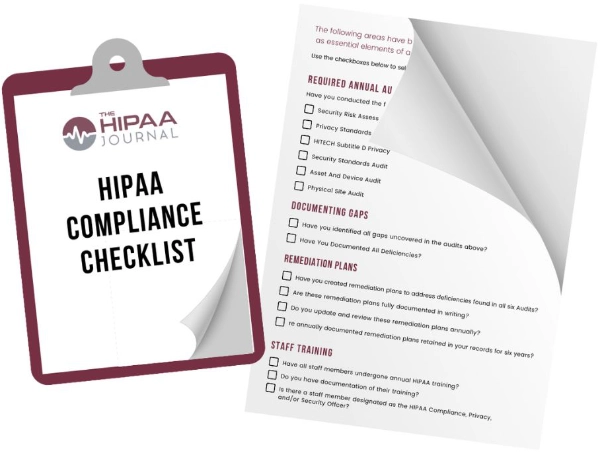
HIPAA Compliance Checklist
Immediate Delivery of Checklist Link To Your Email Address
Please Enter Correct Email Address
Your Privacy Respected
HIPAA Journal Privacy Policy
Get The FREE
HIPAA Compliance Checklist
Immediate Delivery of Checklist Link To Your Email Address
Please Enter Correct Email Address
Your Privacy Respected
HIPAA Journal Privacy Policy