

Steve Alder


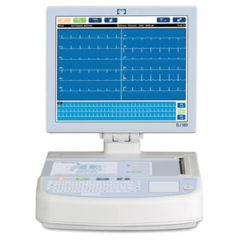
Vulnerabilities Identified in Welch Allyn Resting Electrocardiograph Devices
Hillrom Medical Device Management has announced that two vulnerabilities have been identified in certain Welch Allyn medical devices. If exploited the vulnerabilities could allow an unauthorized attacker to compromise software security by executing commands, gaining privileges, and reading sensitive information while evading detection. The vulnerabilities affect the following Hillrom products: Welch Allyn ELI 380 Resting Electrocardiograph (versions 2.6.0 and prior) Welch Allyn ELI 280/BUR280/MLBUR 280 Resting Electrocardiograph (versions 2.3.1 and prior) Welch Allyn ELI 250c/BUR 250c Resting Electrocardiograph (versions 2.1.2 and prior) Welch Allyn ELI 150c/BUR 150c/MLBUR 150c Resting Electrocardiograph (versions 2.2.0 and prior) The two vulnerabilities were discovered by an anonymous researcher who reported to Hillrom. The most serious vulnerability – tracked as CVE-2022-26389 – has a CVSS v3 severity score of 7.7 out of 10 (high severity), and is due to improper access controls for restricting attempts at accessing resources by unauthorized individuals. The second...
HHS Offers Advice to Help Healthcare Organizations Strengthen Their Cyber Posture
The HHS’ Health Sector Cybersecurity Coordination Sector (HC3) has published guidance for healthcare organizations to help them improve their cyber posture. Cyber posture is the term given for the overall strength of an organization’s cybersecurity, protocols for predicting and preventing cyber threats, and the ability to continue to operate while responding to cyber threats. To comply with the HIPAA Security Rule, organizations are required to implement safeguards to ensure the confidentiality, integrity, and availability of electronic protected health information, and reduce risks to a low and acceptable level. Technical safeguards will help to keep ePHI private and confidential and will ensure ePHI can be recovered in the event of a destructive cyberattack. A robust cybersecurity program can help to limit the damage caused in the event of an attack, can prevent the theft of sensitive information such as ePHI and intellectual property, limit the potential for misuse of patient data, and will help to improve customer confidence. HC3 details several steps that can be taken to...
Central Florida Inpatient Medicine Email Security Incident Reported
Lake Mary, FL-based Central Florida Inpatient Medicine (CFIM) has recently discovered that the email account of an employee has been accessed by an unauthorized individual, who may have viewed emails and files containing patients’ protected health information. The substitute breach notice states that CFIM learned that the email account contained sensitive patient data on May 5, 2022; however, the email account was breached between August 21, 2021, and September 17, 2021. The delay in issuing notifications to affected individuals was due to “an extensive forensic investigation and comprehensive and time-consuming manual document review.” The review revealed the emails and attachments included information such as names, dates of birth, medical information including diagnosis and/or clinical treatment information, physician and/or hospital name, dates of service, and health insurance information. A limited number of Social Security numbers, driver’s license numbers, financial account information, and usernames and passwords were also exposed. CFIM said no evidence was found to...

Bill Seeks to Ban Data Brokers from Selling Health and Location Data
A new bill has been introduced by Sen. Elizabeth Warren (D-MA) that seeks to ban data brokers from selling the health and location data of Americans. The bill, The Health and Location Data Protection Act, was co-sponsored by Sens. Ron Wyden (D-OR), Chair of the Senate Finance Committee; Patty Murray (D-WA), Chair of the Senate Health, Education, Labor, and Pensions Committee; Sheldon Whitehouse (D-RI); and Bernie Sanders (I-VT.), Chair of the Senate Budget Committee. “Data brokers profit from the location data of millions of people, posing serious risks to Americans everywhere by selling their most private information,” said Senator Warren. “With this extremist Supreme Court poised to overturn Roe v. Wade and states seeking to criminalize essential health care, it is more crucial than ever for Congress to protect consumers’ sensitive data.” Currently, data brokers are largely unregulated by federal law, yet they are collecting highly sensitive data from Americans, including their location. That information is gathered from a huge range of mobile apps and, in many cases, the data is...

Bipartisan Legislation Introduced to Strengthen Cybersecurity for Medical Devices
A bipartisan bill – The Strengthening Cybersecurity for Medical Devices Act – has been introduced which calls for the U.S. Food and Drug Administration (FDA) to review and update its guidelines on medical device cybersecurity more frequently to ensure devices are protected from potential hacking and cyberattacks. The bill, introduced by Sen. Jacky Rosen (D-NV) and co-sponsored by Sen Todd Young (R-IN), calls for the Secretary of the Department of Health and Human Services (HHS), in consultation with the Director of the Cybersecurity and Infrastructure Security Agency (CISA), to provide updated guidance on medical device cybersecurity to FDA every year, and for the FDA to issue updated guidelines and suggestions on medical device cybersecurity at least every two years. The frequency of updates needs to be improved to ensure the guidelines remain current, especially considering the fast-evolving threat landscape and the extent to which the healthcare industry is being targeted by cyber threat actors. “Medical devices are increasingly connected to the Internet or other...

Get The FREE
HIPAA Compliance Checklist
Immediate Delivery of Checklist Link To Your Email Address
Please Enter Correct Email Address
Your Privacy Respected
HIPAA Journal Privacy Policy
Get The FREE
HIPAA Compliance Checklist
Immediate Delivery of Checklist Link To Your Email Address
Please Enter Correct Email Address
Your Privacy Respected
HIPAA Journal Privacy Policy




