
Steve Alder


Salusive Health Closes Business Following Cyberattack
Salusive Health, the developer of the myNurse platform which helps physician practices streamline disease management, has experienced a cyberattack in which patient data was compromised. In its breach notification letters to patients, Salusive Health explained that it identified unauthorized activity within its computer network on March 7, 2022, and immediately implemented containment, mitigation, and restoration efforts, and engaged third-party cybersecurity experts to assist with those processes. The investigation confirmed that unauthorized individuals accessed the personal and protected health information of patients, including name, gender, home address, phone number, email address, date of birth, medical history, diagnosis and treatment information, dates of service, lab test results, prescription information, provider name, medical account number, health insurance policy and group plan number, group plan provider, and claim information. Salusive Health said it implemented additional security measures to prevent further breaches, has notified affected individuals and offered...
6 HIPAA-Regulated Entities Report Email Account Breaches and the Exposure of PHI
6 data breaches have recently been reported by HIPAA-regulated entities that have collectively resulted in the exposure and potential theft of the protected health information of tens of thousands of individuals. La Casa de Salud, New York The Acacia Network, a New York City-based human services organization, has recently notified the HHS’ Office for Civil Rights about an email account breach that was detected on July 17, 2020. According to the breach notice on the Acacia Network website, email accounts were accessed for a limited time between June 6, 2020, and June 12, 2020. An investigation was immediately launched and a forensic firm was engaged to provide assistance, but it was not possible to determine if any emails or attachments had been viewed or copied. A review of the emails in the account revealed they contained patients’ names, Social Security numbers, driver’s license numbers, addresses, birthdates financial account numbers, medical record numbers, resident identification numbers, health insurance information, Medicare numbers, provider names, treatment, prescription,...
WEDI Makes Healthcare-Specific Recommendations for Improving the NIST Cybersecurity Framework
The Workgroup for Electronic Data Interchange (WEDI) has responded to the request for information from the National Institute of Standards and Technology (NIST) and has made several recommendations for improving the NIST cybersecurity framework and supply chain risk management guidance to help healthcare organizations deal with some of the most pressing threats facing the sector. Ransomware is one of the main threats facing the healthcare industry, and that is unlikely to change in the short to medium term. To help healthcare organizations deal with the threat, WEDI has suggested NIST increase its focus on ransomware and address the issue of ransomware directly in the cybersecurity framework. NIST published a new ransomware resource in February 2022, which contains valuable information on protecting against, detecting, responding to, and recovering from ransomware attacks. WEDI feels the inclusion of ransomware within the cybersecurity framework will expand the reach and impact of the resource. WEDI has also recommended the inclusion of specific case studies of healthcare...
15 Most Exploited Vulnerabilities in 2021
The Five Eyes security agencies, an alliance of intelligence agencies from Australia, Canada, New Zealand, the United Kingdom, and the United States, have issued a joint advisory about the 15 vulnerabilities in software and operating systems that were most commonly targeted by nation-state hackers and cybercriminal organizations in 2021. Throughout 2021, malicious cyber actors targeted newly disclosed critical software vulnerabilities in attacks against a wide range of industry sectors, including public and private sector organizations. 11 of the most routinely targeted vulnerabilities were publicly disclosed in 2021, although older vulnerabilities continue to be exploited. The 15 most exploited vulnerabilities include 9 that allow remote code execution, 2 elevation of privilege flaws, and security bypass, path traversal, arbitrary file reading, and arbitrary code execution flaws. Top of the list was the maximum severity Log4Shell vulnerability in the Apache Log4j open source logging framework. The vulnerability – CVE-2021-44228 – can be remotely exploited by a threat actor...
Up to 2,592,494 individuals Affected by Smile Brands Ransomware Attack
Irvine, CA-based Smile Brands, a provider of support services for dental offices, has recently provided an update on the number of individuals affected by a ransomware attack that was discovered on April 24, 2021. The attackers gained access to parts of its system on April 23, 2021, that housed files that contained individuals protected health information, including names, addresses, telephone numbers, dates of birth, Social Security numbers, financial information, government-issued ID numbers, and health information. The breach was initially reported to the HHS’ Office for Civil Rights in June 2021 as affecting 1,200 individuals, but the breach report was later amended to indicate up to 199,683 individuals had been affected. However, in the latest update to the Maine attorney general, the breach has been reported as affecting up to 2,592,494 individuals. The initial notice to the Maine attorney general was submitted on October 8, 2021. Smile Brands said affected individuals have been offered a complimentary 12-month membership to a credit monitoring service, which includes...

Get The FREE
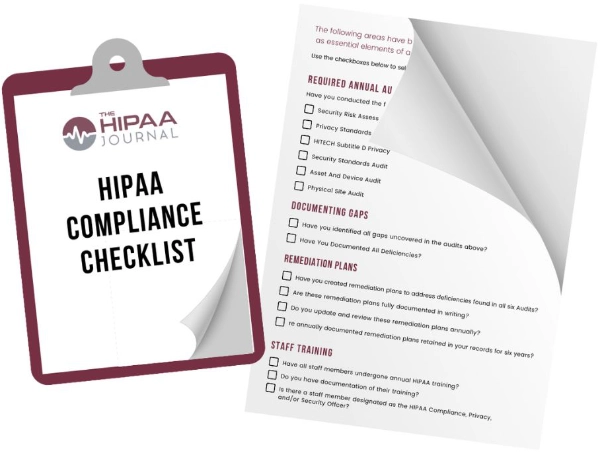
HIPAA Compliance Checklist
Immediate Delivery of Checklist Link To Your Email Address
Please Enter Correct Email Address
Your Privacy Respected
HIPAA Journal Privacy Policy
Get The FREE
HIPAA Compliance Checklist
Immediate Delivery of Checklist Link To Your Email Address
Please Enter Correct Email Address
Your Privacy Respected
HIPAA Journal Privacy Policy