

Steve Alder


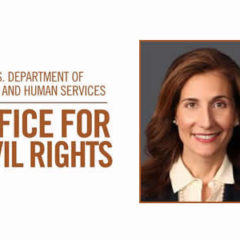
Lisa J. Pino Named New Director of HHS’ Office for Civil Rights
Lisa J. Pino has been named Director of the Department of Health and Human Services’ Office for Civil Rights (OCR) and replaces Robinsue Frohboese, who has served as acting OCR Director since President Trump-appointed Roger Severino resigned from the post in mid-January. OCR is the main enforcer of compliance with the Health Insurance Portability and Accountability Act (HIPAA) Privacy, Security, and Breach Notification Rules, the Patient Safety and Quality Improvement Act, and Patient Safety Rule, as well as enforcing federal civil rights, conscience and religious freedom laws. Pino is from New York City, a fluent Spanish speaker, and the first-generation daughter of immigrant parents. She completed a B.A., M.A., and J.D. at Arizona State University with honors, and Harvard Kennedy School leadership program as a National Hispana Leadership Institute Fellow. Pino has served as legal aid attorney in the Southwest, fighting to protect the rights of migrant farm workers. Her civil rights activities carried on while working for the United States Department of Agriculture (USDA) where...
Fifth of Healthcare Providers Report Increase in Patient Mortality After a Ransomware Attack
While there have been no reported cases of American patients dying as a direct result of a ransomware attack, a new study suggests patient mortality does increase following a ransomware attack on a healthcare provider. According to a recent survey conducted by the Ponemon Institute, more than one fifth (22%) of healthcare organizations said patient mortality increased after a ransomware attack. Ransomware attacks on healthcare providers often result in IT systems being taken offline, phone and voicemail systems can be disrupted, emergency patients are often redirected to other facilities, and routine appointments are commonly postponed. The recovery process can take several weeks, during which time services continue to be disrupted. While some ransomware gangs have a policy of not attacking healthcare organizations, many ransomware operations target healthcare. For instance, the Vice Society ransomware operation has conducted around 20% of its attacks on the healthcare sector and attacks on healthcare organizations have been increasing. During the past 2 years, 43% of respondents...
Data Breaches Reported by Vista Radiology, Indian Creek Foundation & Mankato Clinic
Vista Radiology Reports Breach of the PHI of up to 3,634 Individuals Knoxville, TN-based Vista Radiology has notified 3,634 patients about a ransomware attack experienced on July 11, 2021 which took part of its network offline. A leading computer forensics firm was engaged to conduct a full investigation into the attack. And the initial investigation appeared to suggest the sole purpose of the attack was to encrypt its systems, and that data exfiltration was not involved. However, Vista Radiology was informed on July 15 that some evidence had been found that files or folders containing patient data had been accessed and viewed. The investigation confirmed files were encrypted in the evening of July 10 with a subset of those files accessed prior to encryption. The files that had been viewed only contained a limited amount of patient data and no significant amount of data were exfiltrated by the attackers. It was not possible to determine if the PHI of any specific patients had been accessed, so notification letters were sent to all patients potentially affected by the attack. The...
Vice Society Ransomware Gang Attacks United Health Centers of San Joaquin Valley
The Vice Society ransomware gang claims to have conducted a ransomware attack on the California healthcare provider United Health Centers of San Joaquin Valley. United Health Centers operates more than 20 community health centers in Fresno, Kings, and Tulare counties. The Vice Society ransomware gang emerged mid-2021 and is believed to be a spin-off of the HelloKitty ransomware operation. The gang is known to use a variety of methods to gain access to victims networks, including exploiting vulnerabilities such as the PrintNightmare bugs. The gang is known for exfiltrating data from victims’ systems prior to the use of ransomware to encrypt files. Data are then published on its data leak site to pressure victims into paying the ransom. This attack appears to be no exception. Bleeping Computer reports it was notified on August 31, 2021 about the ransomware attack on United Health Centers by a trusted member of the cybersecurity community who said the healthcare provider’s entire network was shut down as a result of the attack. The cyberattack has yet to appear on the HHS’ Office for...
Email Breaches Reported by Eastern Los Angeles Regional Center & Mercy Grace Private Practice
Eastern Los Angeles Regional Center has discovered the email account of an employee has been accessed by an unauthorized individual. Suspicious activity was detected in the email account on July 15, 2021. A password reset was performed to prevent further unauthorized access and an investigation was launched to determine the nature and scope of the breach. It was confirmed that the account was accessed for a limited period of time on July 15, 2021 and that the email account contained the protected health information of 12,921 individuals, including first and last names, Social Security numbers, ELARC-issued client identifier numbers, Tax ID numbers, medical histories, treatment or diagnosis information, and health insurance information. Eastern Los Angeles Regional Center said it found no evidence to suggest any information in the email account was exfiltrated or subjected to actual or attempted misuse. Additional technical safeguards have been implemented to further enhance the security of sensitive information and affected individuals have been offered 12 months of complimentary...

Get The FREE
HIPAA Compliance Checklist
Immediate Delivery of Checklist Link To Your Email Address
Please Enter Correct Email Address
Your Privacy Respected
HIPAA Journal Privacy Policy
Get The FREE
HIPAA Compliance Checklist
Immediate Delivery of Checklist Link To Your Email Address
Please Enter Correct Email Address
Your Privacy Respected
HIPAA Journal Privacy Policy




