

Steve Alder



Seasonal Worker Sentenced to 42 Months Imprisonment for Stealing Data from Healthcare.Gov Database
A seasonal employee at a Virginia-based tech company that supported the Centers for Medicare & Medicaid Services (CMS) by operating contact centers that provided assistance with Medicare enrollment and other services, has been sentenced to 42 months in jail for accessing patient records, stealing personally identifiable information (PII), and using the PII for financial gain. While working at a call center in Bogalusa, LA, Colbi Trent Defiore, 27, of Carriere, MS, accessed the protected health information of more than 8,000 individuals stored in the HHS healthcare.gov database without authorization, copied that information, and used it for criminal activity, including opening credit lines in individuals’ names. Defiore had been employed by the company on three occasions in 2014, 2017, and 2018. He was discovered to have accessed records without authorization during his last employment period. The company had taken steps to ensure personally identifiable information (PII) was protected and had provided training to all employees on how to handle that information securely. In...
House Passes Bill Calling for HHS to Recognize Adoption of Cybersecurity Best Practices
A new bill (HR 7898) has been passed by the House Energy and Commerce Committee which seeks to amend the HITECH Act to require the Department of Health and Human Services to recognize whether cybersecurity best practices have been adopted by HIPAA-covered entities and business associates when making certain determinations, such as financial penalties following security breaches or for other regulatory purposes. The HIPAA Safe Harbor Bill, if signed into law, would reward covered entities and business associates that have met cybersecurity practices through reduced financial penalties and shorter compliance audits. The legislation calls for the HHS Secretary to consider whether the entity has adequately demonstrated recognized security practices have been in place for no less than 12 months, which may mitigate financial penalties, result in an early, favorable termination of an audit, or mitigate other remedies which may otherwise have been agreed with respect to resolving potential HIPAA Security Rule violations. The bill defines ‘Recognized Security Practices’ as “standards,...
CISA: SolarWinds Orion Software Under Active Attack
The Cybersecurity and Infrastructure Security Agency (CISA) has issued a warning that sophisticated hackers are actively exploiting SolarWinds Orion IT monitoring and management software. The cyberattack, which is ongoing, is believed to be the work of a highly sophisticated, evasive, nation state hacking group who created a Trojanized version of Orion software that has been used to deploy a backdoor into customers’ systems dubbed SUNBURST. The supply chain attack has impacted around 18,000 customers, who are understood to have downloaded the Trojanized version of SolarWinds Orion and the SUNBURST backdoor. SolarWinds Orion is used by large public and private organizations and government agencies. SolarWinds customers include all five branches of the U.S. military, the Pentagon, State Department, NASA and National Security Agency. Its solutions are also used by 425 of the 500 largest publicly traded U.S. companies. The US Treasury, US National Telecommunications and Information Administration (NTIA), and Department of Homeland Security are known to have been attacked. The campaign...

Serious Vulnerabilities Identified in Medtronic MyCareLink Smart Patient Readers
Three serious vulnerabilities have been identified in Medtronic MyCareLink (MCL) Smart Patient Readers, which could potentially be exploited to gain access to and modify patient data from the paired implanted cardiac device. Exploitation of the vulnerabilities together could permit remote code execution on the MCL Smart Patient Reader, allowing an attacker to take control of a paired cardiac device. In order to exploit the vulnerabilities, an attacker would need to be within Bluetooth signal proximity to the vulnerable product. The flaws are present in all versions of the MCL Smart Model 25000 Patient Reader. The first vulnerability, tracked as CVE-2020-25183, is an authentication protocol vulnerability. The method used to authenticate the MCL Smart Patient Reader and the Medtronic MyCareLink Smart mobile app can be bypassed. An attacker using another mobile device or malicious app on the patient’s smartphone could authenticate to the patient’s MCL Smart Patient Reader, tricking it into believing it is communicating with the patient’s smartphone app. The vulnerability has been...
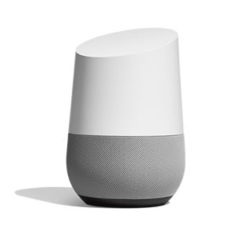
Are Google Home and Google Assistant HIPAA Compliant?
Can Google Home and Google Assistant be used in medical practices? Is Google Assistant HIPAA compliant or would using it in the workplace constitute a HIPAA violation? Connected home assistants such as Google Home (also known as Google Nest since 2019) are growing in popularity. According to a 2018 study by market research firm Cognilytica, 51% of people use voice assistants in the car, 39% use them at home, and 1% use them at work. Apple’s Siri has the greatest market share followed by Google Assistant, which powers Google Home smart speakers. It may be tempting to bring a Google Home device into the office and use it to take notes, get quick answers to questions, launch applications, and schedule reminders and calls. In a normal office environment, a Google Home device could possibly be used, but in healthcare, there is considerable potential for a HIPAA violation. Virtual assistants are being developed for use in healthcare and they have potential to change how physicians interact with medical records and deliver patient care, but currently most virtual assistants lack the...

Get The FREE
HIPAA Compliance Checklist
Immediate Delivery of Checklist Link To Your Email Address
Please Enter Correct Email Address
Your Privacy Respected
HIPAA Journal Privacy Policy
Get The FREE
HIPAA Compliance Checklist
Immediate Delivery of Checklist Link To Your Email Address
Please Enter Correct Email Address
Your Privacy Respected
HIPAA Journal Privacy Policy




