

Steve Alder


Konica Minolta Settles EHR False Claims Case for $500,000
Konica Minolta Healthcare Americas Inc. has agreed to pay a $500,000 financial penalty to settle a case against its former subsidiary, Viztek LLC, to resolve False Claims Act violations related to its electronic health record (EHR) product. The American Recovery and Reinvestment Act of 2009 established the Medicare & Medicaid EHR Incentive Programs to encourage healthcare providers to adopt a certified EHR. Healthcare providers that adopted a certified EHR were entitled to claim incentive payments to offset the cost purchasing the solution, provided they were able to demonstrate meaningful use of the EHR technology. Companies that developed and marketed EHR solutions were required to demonstrate that their products met the HHS-adopted criteria and obtain certification for their solutions. According to a Viztek whistleblower, a former product manager at the company, Viztek and Konica Minolta Healthcare had falsified testing results of the Viztek solution, EXA EHR, in 2015 and misrepresented the capabilities of the product. Konica Minolta acquired Viztek in October 2015 during...
Utah Pathology Services Email Breach Potentially Affects 112,000 Patients
Utah Pathology Services has announced an unauthorized individual has gained access to the email account of an employee and attempted to redirect funds from Utah Pathology. The breach was detected promptly, the compromised email account was secured, and the attempted fraud was unsuccessful and did not involve any patient information. Independent IT and forensic investigators were engaged to assist with the investigation and help determine the extent of the breach. The investigation is ongoing, but it has now been confirmed that the compromised email account contained the personal and protected health information of 112,124 patients. The purpose of the attack appears to have been to redirect funds to an account under the control of the attacker, rather than to steal patient data; however, the possibility of data theft could not be ruled out and affected individuals are now being notified about the breach. The compromised email account contained the following types of information in addition to patient names: Gender, date of birth, mailing address, phone number, email address, health...
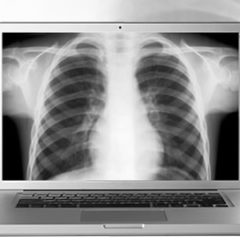
Radiology Groups Issue Warning About PHI Exposure in Online Medical Presentations
The American College of Radiology, the Society for Imaging Informatics in Medicine, and the Radiological Society of North America have issued a warning about the risk of accidental exposure of protected health information (PHI) in online medical presentations. Healthcare professionals often create presentations that include medical images for educational purposes; however, care must be taken to ensure that protected health information is not accidentally exposed or disclosed. Medical images contain embedded patient identifiers to ensure the images can be easily matched with the right patient but advances in web crawling technology is now allowing that information to be extracted, which places patient privacy at risk. The web crawling technology used by search engines such as Google and Bing have enabled the large-scale extraction of information from previously stored files. Advances in the technology now allow information in slide presentations that was previously considered to be de-identified to be indexed, which can include patient identifiers. Source images can be extracted...
Former Nursing Home Employee Accused of Defrauding Residents Out of $25,000
A former nursing home employee has been accused of stealing the identities of dozens of nursing home residents and using their accounts to pay her bills. The woman, Anna Zur, 39, of Franklin Park, IL, previously worked in the corporate office of a care facility and abused her access rights to residents’ information to obtain documents and financial information, which she sent to a personal email account. She has been accused of stealing the identities of residents and using their accounts to purchase goods and services and pay her bills. The Palos Heights Police Department conducted a year-long investigation into cases of identity theft and fraud and issued a warrant for the woman’s arrest. She was taken into custody on August 26, 2020 and has been charged with felony counts of wire fraud and continuing a financial crimes enterprise. The woman has been linked to 35 cases of identity theft and is alleged to have defrauded individuals out of $25,000. Patient Data Stolen in Ventura Orthopedics Ransomware Attack The Californian healthcare provider Ventura Orthopedics has experienced a...
HHS Announces Limited HIPAA Privacy Rule Waivers Due to Hurricane Laura and the Californian Wildfires
The Secretary of the HHS, Alex Azar, has declared a public health emergency exists in the states of Louisiana and Texas as a result of the consequences of Hurricane Laura, and in California due to ongoing wildfires. During public health emergencies the HIPAA Rules are not suspended; however, the HHS Secretary may choose to waive certain provisions of the HIPAA Privacy Rule under the Project Bioshield Act of 2004 (PL 108-276) and section 1135(b)(7) of the Social Security Act. In addition to the declaration of public health emergencies, the HHS Secretary has declared that sanctions and penalties against hospitals will be waived for the following provisions of the HIPAA Privacy Rule. The requirements to obtain a patient’s agreement to speak with family members or friends involved in the patient’s care. See 45 CFR 164.510(b). The requirement to honor a request to opt out of the facility directory. See 45 CFR 164.510(a). The requirement to distribute a notice of privacy practices. See 45 CFR 164.520. The patient’s right to request privacy restrictions. See 45 CFR 164.522(a)....

Get The FREE
HIPAA Compliance Checklist
Immediate Delivery of Checklist Link To Your Email Address
Please Enter Correct Email Address
Your Privacy Respected
HIPAA Journal Privacy Policy
Get The FREE
HIPAA Compliance Checklist
Immediate Delivery of Checklist Link To Your Email Address
Please Enter Correct Email Address
Your Privacy Respected
HIPAA Journal Privacy Policy




