

Steve Alder


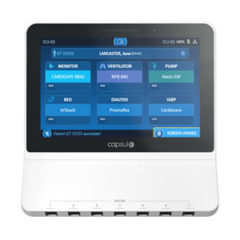
Vulnerability Identified in Capsule Technologies SmartLinx Neuron 2 Medical Information Collection Devices
A high severity flaw has been identified in Capsule Technologies SmartLinx Neuron 2 medical information collection devices running version 6.9.1 of the software. SmartLinx Neuron 2 is a bedside mobile clinical computer that automatically collects vital signs data and connects to hospitals’ medical device information systems. The flaw, tracked as CVE-2019-5024, is a restricted environment escape vulnerability due to the failure of a protection mechanism in kiosk mode. The flaw is present in all versions of Capsule Technologies SmartLinx Neuron 2 prior to version 9.0. Kiosk mode is a restricted environment that prevents users from exiting the running applications and accessing the underlying operating system. By exploiting the flaw, an attacker can exit kiosk mode and access the underlying operating system with full administrative rights. That could allow the attacker to gain full control of a trusted device on the hospital’s internal network. To exploit the flaw an attacker would need to have physical access to the device. The flaw could be exploited by connecting to the device...
At Least 41 Healthcare Providers Experienced Ransomware Attacks in the First Half of 2020
The New Zealand-based cybersecurity firm Emsisoft has released ransomware statistics for 2020 that show there have been at least 41 successful ransomware attacks on hospitals and other healthcare providers in the first half of the year. There were 128 successful ransomware attacks on federal and state entities, healthcare providers, and educational institutions in the first 6 months of 2020, with the healthcare industry accounting for 32% of those attacks. The large number of ransomware attacks in 2020 follows on from a spike in attacks in late 2019. 2019 saw more than double the number of ransomware attacks as 2018, attacks on healthcare providers increased by 350% in the final quarter of 2019. 966 entities were successfully attacked with ransomware across all industry sectors in 2019 and those attacks are estimated to have cost $7.5 billion. 2020 started badly for the healthcare industry with 10 successful ransomware attacks on healthcare providers in January, followed by a further 16 successful ransomware attacks in February. There was a marked decrease in attacks in March as...

HHS Adopts Changes to 42 CFR Part 2 Regulations to Improve Care Coordination
The Confidentiality of Substance Use Disorder Patient Records regulations (42 CFR Part 2) have been revised by the Department of Health and Human Services’ Substance Abuse and Mental Health Services (SAMHSA). The 42 CFR Part 2 regulations, first promulgated in 1975, were written at a time when there was great concern that information relating to substance use disorder could be used against an individual. The main purpose of 42 CFR Part 2 was to ensure that a person who seeks help and receives treatment for substance use disorder is not placed at any greater risk or is made more vulnerable than a person who does not seek treatment. Under the 42 CFR Part 2 regulations, before information relating to a substance use disorder treatment program can be shared, consent must be obtained from the patient in writing, except in limited circumstances. 42 CFR Part 2 was important at the time and remains so, but a lot has changed since 42 CFR Part 2 took effect. Many healthcare providers find the regulations burdensome, they can hamper care coordination, and can put a patient’s safety at risk....
Benefit Recovery Specialists Hacked and PHI of 274,837 Individuals Exposed
The Houston, TX-based billing and collection company, Benefit Recovery Specialists, Inc., (BRSI) has announced it has discovered malware on its systems that may have allowed unauthorized individuals to view or obtain protected health information. The personal and protected health information (PHI) on BRSI systems had been provided to the company in its capacity as a business associate and included the PHI of current and former members and patients of its health plan and healthcare provider customers. The malware was discovered on April 30, 2020 and an internal investigation was immediately launched. Third-party computer forensics specialists were engaged to help investigate the breach and determine the extent and scope of the attack. The investigation revealed an unauthorized individual had gained access to BRSI systems using stolen employee credentials. Once a foothold had been established in the network, the attacker downloaded malware. The forensic investigators concluded that the attacker first gained access to BRSI systems on April 20, 2020 and had access to the systems until...
States Start to Make Temporary COVID-19 Telehealth Changes Permanent
Following the decision of the HHS’ Centers for Medicare and Medicaid Services (CMS) to expand access to telehealth services and increase coverage in response to the COVID-19 pandemic, states introduced temporary emergency waivers to their telehealth laws. There have been increasing calls for the changes to telehealth regulations to be made permanent and several states, including Massachusetts, Colorado, and Idaho, and recently taken steps to see the recent changes to telehealth laws continue after the COVID-19 public health emergency is declared over. Massachusetts Makes COVID-19 Telehealth Policy Changes Permanent On March 16, 2020, the Massachusetts Board of Registration in Medicine (BORIM) approved a new policy that states the same standard of care applies to in-person and telehealth visits and a face-to-face encounter is not a pre-requisite for a telehealth visit. The policy was introduced on a temporary basis in response to COVID-19, but on June 26, 2020, BORIM made the policy change permanent. This is the first telehealth-specific policy to be adopted by BORIM and...

Get The FREE
HIPAA Compliance Checklist
Immediate Delivery of Checklist Link To Your Email Address
Please Enter Correct Email Address
Your Privacy Respected
HIPAA Journal Privacy Policy
Get The FREE
HIPAA Compliance Checklist
Immediate Delivery of Checklist Link To Your Email Address
Please Enter Correct Email Address
Your Privacy Respected
HIPAA Journal Privacy Policy




