

Steve Alder



Hurricane Dorian: Limited HIPAA Waiver Issued in Puerto Rico, Florida, Georgia, North and South Carolina
Alex Azar, Secretary of the Department of Health and Human Services (HHS), has declared a public health emergency (PHE) in Puerto Rico and the states of Florida, Georgia, and South Carolina due to Hurricane Dorian. On September 4, a PHE was also declared in North Carolina, retroactive to September 1, 2019. The announcement follows the presidential PHE in the above areas as the states prepare for when the hurricane makes landfall. The declaration was accompanied by the announcement of a limited waiver of HIPAA sanctions and penalties for certain provisions of the HIPAA Privacy Rule, as mandated by the Project Bioshield Act of 2004 of the Social Security Act. The waiver only applies in the emergency areas and for the period of time covered by the PHE. The waiver applies to hospitals that have implemented their disaster protocol, and only for up to 72 hours from when the disaster protocol was implemented, unless the PHE declaration terminates before that 72-hour period has elapsed. Once the PHE comes to an end, hospitals are required to comply with all requirements of the HIPAA...
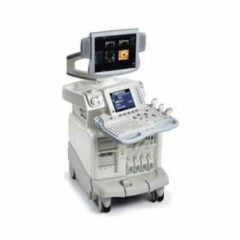
Vulnerability Discovered in Philips HDI 4000 Ultrasound Systems
A vulnerability has been discovered in Philips HDI 4000 Ultrasound systems which could be exploited to gain access to ultrasound images. In addition to stealing data, an attacker could doctor ultrasound images to prevent diagnosis of a potentially life-threatening health condition. Philips HDI 4000 Ultrasound systems are based on legacy operating systems such as Windows 2000 which are no longer supported. Any vulnerability in the operating system could be exploited to gain access to the system and patient data. One such vulnerability – CVE-2019-10988 – was detected by security researchers at Check Point, who reported the problem to Philips. US-CERT has recently issued an advisory about the vulnerability. Philips HDI 4000 Ultrasound systems reached end of life in December 2013 and are no longer sold, updated, or supported by Philips, yet many healthcare organizations continue to use the systems even through they are vulnerable to attack. US-CERT warns that multiple exploits are already in the public domain and could be used to gain access to the systems. Since the devices are...
Code Execution Vulnerability Identified in Change Healthcare Cardiology Devices
A vulnerability has been identified in Change Healthcare Cardiology, McKesson Cardiology, and Horizon Cardiology devices. The vulnerability could be exploited by a locally authenticated user to insert files that could allow the attacker to execute arbitrary code on a vulnerable device. The vulnerability – CVE-2019-18630 – was identified by Alfonso Powers and Bradley Shubin of Asante Information Security who reported the vulnerability to Change Healthcare. Change Healthcare notified the National Cybersecurity & Communications Integration Center (NCCIC) and a security advisory has now been issued by US-CERT. The vulnerability has been assigned a CVSS v3 base score of 7.8 out of 10 and is the result of incorrect default permissions in the default installation. While the vulnerability only requires a low level of skill to exploit, an attacker would first need local system access which will limit the potential for the flaw to be exploited. Change Healthcare has issued an advisory for users of the following cardiology devices: Horizon Cardiology 11.x and earlier Horizon Cardiology...
UCMC and Google File Motions to Dismiss HIPAA Privacy Lawsuit
On June 26, a patient of University of Chicago Medical Center (UCMC) filed a lawsuit against the medical center and Google over an alleged privacy violation related to the sharing of protected health information (PHI) without first properly de-identifying the data. Patient information was shared with Google to assist with the development of its predictive medical data analytics technology. The HIPAA Privacy Rule does not prohibit the sharing of information with third parties such as technology companies, provided consent is obtained from patients prior to information being shared. Alternatively, healthcare organizations can share patient information provided it is de-identified. Under HIPAA, that means removing all identifiers to ensure patients cannot be identified. HIPAA calls for one of two methods to be used to de-identify PHI: Expert determination or the safe harbor method. The latter involves stripping PHI of all identifiers, while the former requires an expert to determine, through recognized statistical and scientific principles, that the risk of patients being...
73 Email Accounts Compromised in Major Phishing Attack on NCH Healthcare System
The importance of security awareness training for healthcare employees has been highlighted by a recent phishing attack on Bonita Springs, FL-based NCH Healthcare System. The attack was detected on June 14, 2019 when suspicious email activity was identified in relation to its payroll system. The investigation revealed a staggering 73 employees had responded to phishing emails and disclosed their account credentials to the scammers. It is common for healthcare organizations to identify an email account breach and later discover the attack was more extensive than originally thought. Oftentimes, several emails accounts are discovered to have been compromised, often as a result of lateral phishing – the use of one compromised email account to send phishing emails to other individuals in the organization. However, a breach as extensive as this is fortunately rare. NCH Healthcare system is still investigating the attack and is being assisted by a third-party computer forensics firm. The initial findings of the investigation suggest the attackers were not concerned with obtaining PHI,...

Get The FREE
HIPAA Compliance Checklist
Immediate Delivery of Checklist Link To Your Email Address
Please Enter Correct Email Address
Your Privacy Respected
HIPAA Journal Privacy Policy
Get The FREE
HIPAA Compliance Checklist
Immediate Delivery of Checklist Link To Your Email Address
Please Enter Correct Email Address
Your Privacy Respected
HIPAA Journal Privacy Policy




