

Steve Alder


Premera Blue Cross Settles Multi-State Action for $10 Million
Premera Blue Cross has agreed to a $10 million settlement to resolve a multi-state data breach lawsuit involving 30 state attorneys general. The settlement resolves alleged violations of state and federal laws that contributed to its 10.4 million record data breach in 2014. A hacker gained access to Premera Health’s network on May 5, 2014 and remained undetected until March 6, 2015. For almost a year the hacker had access to highly sensitive plan member information such as names, contact information, dates of birth, member ID numbers, and Social Security numbers. Alabama, Alaska, Arizona, Arkansas, California, Connecticut, Florida, Hawaii, Idaho, Indiana, Iowa, Kansas, Kentucky, Louisiana, Massachusetts, Minnesota, Mississippi, Montana, Nebraska, Nevada, New Jersey, North Carolina, North Dakota, Ohio, Oklahoma, Oregon, Rhode Island, Utah, Vermont and Washington all participated in the lawsuit. Washington State Attorney General Bob Ferguson led the investigation and looked at the security vulnerabilities that had been exploited by the hacker to gain access to such a large amount of...
More than 1,000 Essential Health Patients Impacted by Nemadji Research Corporation Breach
Essentia Health, an integrated health system serving Minnesota, Wisconsin, North Dakota, and Idaho, is sending notifications to more than 1,000 patients alerting them to the exposure of some of their protected health information (PHI). Like many healthcare providers, Essentia Health works with a third-party vendor that provides billing services to help recover lost revenue. Those services were provided by a Bruno, MN-based billing services firm called Nemadji Research Corporation. Essentia Health provided Nemadji with certain types of PHI to allow the company to perform its contracted services. Essentia Health did not disclose exactly what types of information were exposed in the substitute breach notice posted on its website. On March 28, 2019, Nemadji discovered unusual activity in an employee’s email account. The investigation revealed the employee had fallen for a phishing scam and had disclosed login credentials to the attacker. The account was subjected to unauthorized access for a period of several hours before the account was deactivated. The subsequent investigation...
Phishing Attack on California Business Associate Impacts 14,591 DHS Patients
Nemadji Research Corporation, doing business as California Reimbursement Enterprises, has announced an unauthorized individual has gained access to the email account of an employee and may have viewed or copied the protected health information (PHI) of its clients’ patients. California Reimbursement Enterprises is a business associate of several healthcare facilities and hospitals in California and provides patient eligibility and billing services. The company also provides services to the Los Angeles County Department of Health Services (DHS). A potential email account breach was detected on March 28, 2019 when IT staff identified unusual activity in an employee’s email account. Assisted by a third-party computer forensics expert, Nemadji determined the employee responded to a phishing email the same day and the attacker accessed the account for several hours. All emails in the account were checked and on June 5, 2019, Nemadji confirmed that patient information had been exposed and notifications were issued to affected business partners. The breached email account contained...
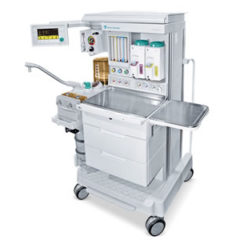
Vulnerability Identified in GE Aestiva and Aespire Anesthesia Machines
An improper authentication vulnerability has been identified in GE Aestiva and Aespire Anesthesia devices which are used in hospitals throughout the United States. The vulnerability – CVE-2019-10966 – could allow a remote attacker to modify the parameters of a vulnerable device and silence alarms. Possible alterations include making changes to gas composition parameters to correct flow sensor readings for gas density and altering the time on the device. The flaw is due to the exposure of certain terminal server implementations which extend GE Healthcare anesthesia device serial ports to TCP/IP networks. The vulnerability could be exploited if serial devices are connected via an added unsecured terminal server to a TCP/IP network configuration. The vulnerability has been assigned a CVSS v3 base score of 5.3 out of 10 and affects GE Aestiva and Aespire versions 7100 and 7900. GE Healthcare has confirmed this is not a vulnerability in GE Healthcare device themselves. While the flaw could be exploited, GE Healthcare has determined via a formal risk investigation that “there is no...
Consumers Concerned About Medical Device Security
The importance consumers place on the privacy and security of their health information has been explored in a recent nCipher Security survey. The survey was conducted on 1,300 U.S. consumers and explored attitudes toward online privacy, the sharing of sensitive information, and data breaches. The survey revealed consumers are more concerned about their financial information being hacked than their health information. 42% of respondents said their biggest cybersecurity concern was their financial information being stolen, compared to 14% whose main concern was the theft of their health data. Concern about financial losses is understandable. Theft of financial information can have immediate and potentially very serious consequences. Theft of health data may not be viewed to be as important by comparison, but consumers are still concerned about the consequences of a breach of their personal information. Over one third of consumers said they were worried that hackers would tamper with their data and 44% were concerned about identity theft after a data breach. 22% of consumers said they...

Get The FREE
HIPAA Compliance Checklist
Immediate Delivery of Checklist Link To Your Email Address
Please Enter Correct Email Address
Your Privacy Respected
HIPAA Journal Privacy Policy
Get The FREE
HIPAA Compliance Checklist
Immediate Delivery of Checklist Link To Your Email Address
Please Enter Correct Email Address
Your Privacy Respected
HIPAA Journal Privacy Policy




