

Steve Alder


12,000 Patients of Baystate Health Notified of PHI Exposure Due to Phishing Attack
Massachusetts-based Baystate Health has experienced a phishing attack that has resulted in the exposure of the protected health information of approximately 12,000 patients. Several employee email accounts were compromised between February 7 and March 7, 2019. The phishing attacks were identified during the same time frame and in each case, the compromised email accounts were immediately secured. A third-party computer forensics firm was engaged to assist with the investigation. An analysis of the compromised email accounts revealed they contained patients’ names, dates of birth, diagnoses, treatment information, medications and, in some cases, Social Security numbers, health insurance information, and Medicare numbers. All patients whose protected health information was potentially accessed as a result of the attack were notified by mail on April 5. Patients whose Social Security number was exposed have been offered one year of credit monitoring and identity theft protection services without charge. Those services have been offered as a precaution. No evidence has been uncovered...

Hardin Memorial Health Cyberattack Results in EHR Downtime
Hardin Memorial Health in Kentucky has experienced a cyberattack which caused disruption to its IT systems and EHR downtime. The cyberattack started on the evening of Friday April 5. A statement issued by a spokesperson for the health system confirmed that IT systems were disrupted as a result of a security breach. Details of the cyberattack have not yet been released so it is unclear whether this was a hacking incident, malware or ransomware attack. The health system has been working round the clock to restore affected systems and servers. Hardin Memorial Health’s IT team has already brought most IT systems back online and has restored access to its EHR system in some units. Despite the lack of access to its EHR system, business continued as usual and the hospital did not have to cancel appointments. All 50 of its locations remained open. “At no time during this event has the quality and safety of patient care been affected,” said HMH Vice President and Chief Marketing and Development Officer, Tracee Troutt. Upon discovery of the security breach, emergency procedures were...
Emotet Malware Potentially Exfiltrated PHI of Oregon Endodontic Group Patients
Oregon Endodontic Group has discovered malware has been installed on an office computer which potentially exported data contained in the office’s email account. On November 13, 2018, Oregon Endodontic Group detected suspicious activity within an email account used at its offices. A third -party forensic firm was engaged to assist with the investigation and identify the nature and scope of the security breach. The firm confirmed that a malware variant called Emotet had been downloaded onto an office computer. Emotet is a banking Trojan that is capable of exfiltrating data contained in email accounts. The computer forensics firm could not confirm whether any email data had been exfiltrated, but the possibility could not be ruled out. The email account concerned was analyzed to determine whether it contained any protected health information. The analysis was completed on February 11, 2019. The types of information contained in the account were limited to names along with one of more of the following data elements: Date of birth, diagnosis information, treatment information, and health...
1,600 Ohio Patients Notified of Impermissible PHI Disclosure
993 Ohioans who receive benefits from Medicaid or the Ohio Department of Job and Family Services (ODJFS) are being notified that some of their protected health information has been disclosed to unauthorized individuals as a result of a computer error. Three separate incidents were identified. On February 16, 2019, a computer error resulted in a limited amount of protected health information (PHI) of 250 users of the Ohio Benefits Self-Service Portal to appear in another user’s account. The error was identified and corrected the same day. Two further incidents occurred on March 20, 2019. A computer error caused information entered into the Ohio Benefits portal to be saved to incorrect accounts. The computer error has been temporarily fixed and a permanent solution is being developed to prevent any recurrences. As many as 100 individuals were affected. 608 members of ODJFS, 34 recipients of Medicaid benefits, and one individual who received both types of benefits, had some of their PHI mailed to 5 different people as a result of a computer error. The computer error was corrected on...
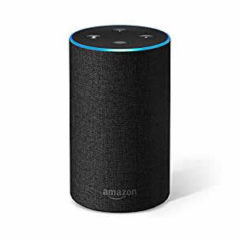
Amazon Announces 6 New HIPAA Compliant Alexa Skills
Six new HIPAA compliant Alexa skills have been launched by Amazon that allow protected health information to be transmitted without violating HIPAA Rules. The new HIPAA compliant Alexa skills were developed by six different companies that have participated in the Amazon Alexa healthcare program. The new skills allow patients to schedule appointments, find urgent care centers, receive updates from their care providers, access their latest blood sugar reading, and check the status of their prescriptions. This is not the first time that Alexa skills have been developed, but a stumbling block has been the requirements of the HIPAA Privacy Rule, which limit the use of voice technology with protected health information. Now, thanks to HIPAA compliant data transfers, the voice assistant can now be used by a select group of healthcare organizations to communicate PHI without violating the HIPAA Privacy Rule. Amazon has stated that it plans to work with many other developers through an invite-only program to develop new skills to use within its HIPAA-eligible environment. Amazon is offering...

Get The FREE
HIPAA Compliance Checklist
Immediate Delivery of Checklist Link To Your Email Address
Please Enter Correct Email Address
Your Privacy Respected
HIPAA Journal Privacy Policy
Get The FREE
HIPAA Compliance Checklist
Immediate Delivery of Checklist Link To Your Email Address
Please Enter Correct Email Address
Your Privacy Respected
HIPAA Journal Privacy Policy




