

Survey Reveals State of Workplace Safety and Preparedness in Healthcare
Earlier this year we invited HIPAA Journal readers to take part in the Rave Mobile Safety annual survey of workplace safety and preparedness. The company has now released the findings of the survey which reveal the level of preparedness for emergencies in healthcare and other industries across the United States.
It should be noted that the survey took place before the COVID-19 public health emergency was declared, which will naturally have triggered a shift in priorities at many organizations.
Safety in the Workplace in 2020
The need for effective communication in emergencies has been highlighted by the coronavirus pandemic, but the survey shows there are other pressing reasons for improving safety and communication in the workplace. In 2019, when the survey was last conducted, 26 respondents reported cases of violence in the workplace. This year the number of individuals who have experienced violence in the workplace has doubled.
The survey showed employees are becoming more safety conscious. 58% of respondents said they would report a safety concern in the workplace regardless of whether they could voice concerns anonymously; however, a high percentage of Gen Z and millennials – 41% – would only report safety concerns if it was possible to do so anonymously. This suggests that 18-29-year-olds are concerned about the negative consequences of voicing their safety concerns.

Get The FREE
OSHA & HIPAA Checklist
Immediate Delivery of Checklist Link To Your Email Address
Please Enter Correct Email Address
Your Privacy Respected
HIPAA Journal Privacy Policy
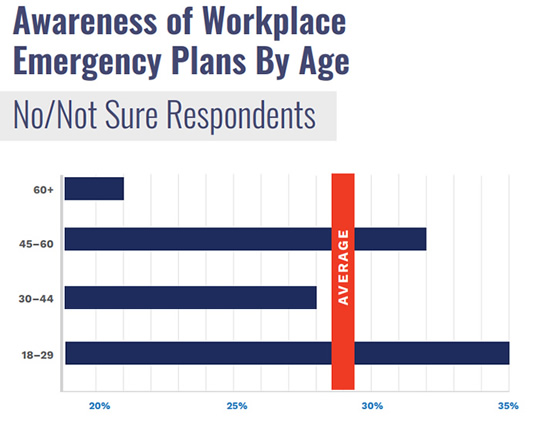
While most employers have developed emergency plans, many are not conducting drills. For instance, 76% of employers have emergency plans for severe weather events, yet only 40% conducted drills to practice their response to such an event, even though 48% of respondents said they had experienced a severe weather event in the past year. Most organizations have developed emergency plans for cyberattacks, but 51% of respondents said drills had not been performed to test those plans. Almost 30% of employees were unsure or unaware of their employer’s emergency plans, with 18-29-year-olds the least well informed.
Communication in Emergencies
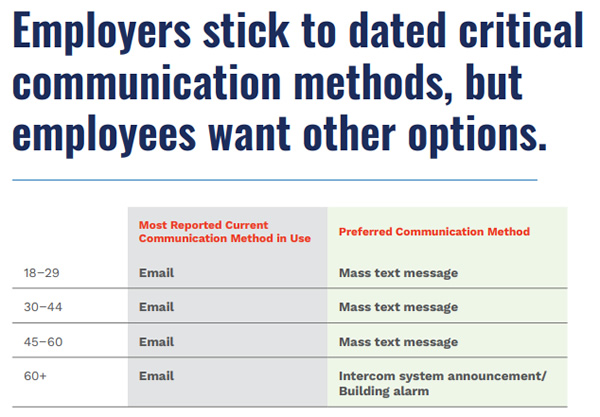
The range of methods used to communicate with workers in emergency situations has increased in 2020. Email remains the most common method of communication and is used by 63% of organizations to communicate emergency information, but communication methods such as mass text messaging have grown in popularity. Mass text messaging is now used by 42% of companies represented in the survey, although many still rely on outdated communication methods such as in-person announcements, which exclude remote workers.

The survey showed employers tend to stick with dated communication methods, even though employees would prefer to receive notifications about safety and security using a more rapid and easily accessible system, such as mass text messages.
Emergency Communication in Healthcare
The survey revealed a significant percentage of healthcare workers were unaware of emergency plans for events such as system outages (22%) and active shooters (16%). When there are emergency situations, email is the most common method of communication, used by 65% of healthcare organizations. Intercom systems were also commonly used (50%) along with in-person announcements (44%). While these can be effective on site, they are not effective for communicating with remote workers, who would prefer to receive notifications via text message, but only 41% of healthcare organizations are using mass text messaging notifications in emergency situations. The survey also revealed gaps in safety protocols, with 80% of healthcare workers not required to perform a safety check-in when working off-site.




