

Steve Alder


One In Five Companies Has Suffered a Data Breach Involving Mobile Devices
One in five companies has suffered a data breach involving mobile devices according to a study recently published by Crowd Research Partners. 39% of respondents said malware had been downloaded onto devices supplied to employees by their company or used under BYOD schemes, and almost a quarter of respondents said devices had connected to malicious Wi-Fi networks. The number of devices that had been compromised is a concern; however, what is more worrying is the extent to which organizations are monitoring the devices that are allowed to connect to their networks. When asked whether devices had connected to malicious networks, 48% of respondents said they were not sure. When asked whether malware had been downloaded onto mobile devices, 35% said they were not sure, and 37% could not say whether mobile devices were involved in security breaches at their organizations. These results suggest that while mobile devices are allowed to connect to work networks, the controls put in place to keep those devices secure were insufficient in many organizations. When asked about the risk control...
Ransomware and HIPAA: Are Attacks Reportable?
Following a number of high-profile ransomware attacks on hospitals, the issue of whether ransomware attacks are reportable under HIPAA has been raised by a number of privacy experts. So far attacks on hospitals, including the Hollywood Presbyterian Medical Center attack in February, have not been added to the HHS breach portal and are unlikely to appear. The healthcare organizations that have announced they have been hit with ransomware infections claim that while files were encrypted, patient data were unaffected. But what about situations when malicious file-encrypting software does lock files containing the PHI of patients? Would those ransomware attacks be reportable under HIPAA? The Department of Health and Human Services’ Office for Civil Rights must be informed of malware attacks that result in hackers gaining access to PHI, but with ransomware the situation is less clear. If ransomware encrypts the Protected Health Information of patients, the attackers are the only individuals with a security key to unlock the data. That does not mean that PHI has been viewed or acquired...
Transition to HIPAA Electronic Administrative Transactions Could Save Industry $8 Billion, says CAQH
On Wednesday this week, the 2015 CAQH Index was released. The data show that many healthcare organizations are continuing to rely on manual administrative processes for basic transactions such as verifying patient coverage, submitting claims, prior authorization, and referral certification, even though these tasks can easily be performed electronically. The CAQH Index is released once a year and is a measure of the adoption of electronic transactions for routine business processes in the healthcare industry. The aim of the report is to raise awareness of the potential cost savings that can be made by switching to electronic HIPAA transactions. The data used for the CAQH Index in 2015 represents some 440 million transactions relating to 92 million patients. The reliance on manual processes rather than HIPAA electronic administrative transactions is costing the healthcare industry dearly. CAQH believes the continued reliance on resource-intensive manual processes is costing the healthcare industry $8 billion each year. Each time health plans and healthcare providers perform a manual...
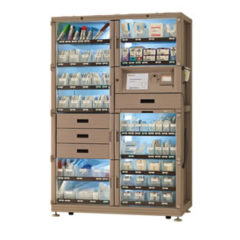
1,400 Vulnerabilities Found in Popular Drug Cabinet System
According to an advisory issued by the Department of Homeland Security, a popular drug cabinet system has been found to have over 1,400 vulnerabilities, many of which could be exploited remotely using publically available exploits. Furthermore, the exploits could be executed by an attacker with a low level of skill. The drug cabinet discovered to contain these vulnerabilities is version 8.1.3 of the Pyxis SupplyStation by CareFusion, which has not been updated since April 2010. However, vulnerabilities exist with a number of older versions of the system, many of which are still in operation and are used in a number of facilities in the United States. The automated drug cabinets dispense products and maintain an accurate stock inventory in real time. Two independent security researchers, Billy Rios and Mike Ahmadi, obtained a decommissioned Pyxis SupplyStation and conducted a static binary analysis against the system’s firmware to search for vulnerabilities. The researchers discovered 1,418 vulnerabilities existed in the version they tested. The vulnerabilities do not exist in the...
Vendor Error Places Mind Springs Health Patients’ PHI in Search Engines
Earlier this month, Virtua Medical Group announced a data breach that resulted from an error made by a transcription service vendor. The protected health information (PHI) of 1,654 patients could be accessed via the Internet and data had been indexed by search engines. It would appear that Virtua was not the only company to be affected by the server configuration error made by its business associate. Mind Springs Health, a Colorado-based provider of mental health and substance abuse services, appears to also have been affected. 2,147 patients have now been notified that their PHI has been exposed as a result of a server misconfiguration error made by an unnamed transcription service provider. As was the case with the Virtua Medical Group data breach, the incident occurred in early January. The substitute breach notice placed on the Mind Springs Health website does not mention when the error occurred, only that it was discovered on January 8, 2016. Highly sensitive data such as Social Security numbers, financial information, credit card numbers, and insurance details were not...

Get The FREE
HIPAA Compliance Checklist
Immediate Delivery of Checklist Link To Your Email Address
Please Enter Correct Email Address
Your Privacy Respected
HIPAA Journal Privacy Policy
Get The FREE
HIPAA Compliance Checklist
Immediate Delivery of Checklist Link To Your Email Address
Please Enter Correct Email Address
Your Privacy Respected
HIPAA Journal Privacy Policy




