

Steve Alder


Kroger Proposes $5 Million Settlement to Resolve Data Breach Lawsuits
The pharmacy and supermarket chain Kroger has proposed a $5 million settlement to resolve lawsuits filed by victims of data breach that exposed their personal and protected health information. Kroger was one of many victims of a cyberattack on Accellion’s File Transfer Appliance (FTA) in December 2020. The Accellion FTA is a legacy solution used to transfer files too large to be sent via email. Hackers exploited several zero-day vulnerabilities in the solution and gained access to the data of more than 100 companies. While ransomware was not used, the attack was linked to the Clop ransomware gang which threatened to publish the exfiltrated data. Individual companies were sent demands for payment to prevent the exposure of their stolen data. Kroger was notified about the breach on January 23, 2021 and received a ransom demand from the attackers on February 2. The FBI was notified, and Kroger paid the ransom on February 18, 2021. The attackers returned the stolen data the following day and provided a video demonstrating the stolen data had been deleted. Approximately 1% of Kroger...
Study Explores Why Many People Don’t Use a Password Manager
One of the easiest ways for hackers to gain access to accounts is to simply guess passwords. Hackers use lists of commonly used passwords and passwords that have been obtained in previous data breaches, and just try each one until the right one is guessed. This automated process can take seconds if particularly weak passwords are used to secure an account. Brute force tactics only work because a lot of users fail to change default passwords, set weak passwords, or reuse passwords across multiple platforms. In the case of the latter, if there is a breach of one platform, the password can then be used to access all other accounts where it has been set. Having – and enforcing – a HIPAA-compliant password policy that requires users to set complex passwords will help to ensure that strong passwords are set, but employees often still set weak passwords and circumvent their employer’s password policy. For instance, setting a password of Password1! to meet the lower/upper case, number, and special character requirements. The most secure passwords are randomly generated long...

Federal Judge Allows Blackbaud Consolidated Class Action Data Breach Lawsuit to Proceed
Plaintiffs in a class action lawsuit against Blackbaud sufficiently demonstrated they have standing, and the lawsuit has survived Blackbaud’s motion to dismiss. Blackbaud is a publicly traded cloud software company with headquarters in Charleston, SC. Blackbaud provides data collection and maintenance solutions for administration, fundraising, marketing, and analytics to entities such as non-profit organizations, foundations, educational institutions, and healthcare organizations. In the course of providing its services, the company collects and stores personally identifiable information (PII) and Protected Health Information (PHI) from its customers’ donors, patients, students, and congregants. From February 7, 2020 to May 20, 2020, cybercriminals gained access to Blackbaud’s systems, exfiltrated data, and then used ransomware to encrypt files on Blackbaud’s systems. A ransom demand was then issued by the attackers and the attackers claimed they would provide the keys to decrypt data on Blackbaud’s systems and permanently delete the data they had exfiltrated if the ransom was...
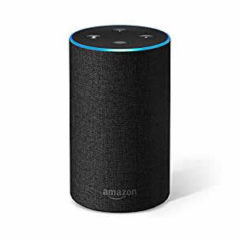
Healthcare Workers File Lawsuit Alleging Amazon Alexa Devices Violated HIPAA
A class action lawsuit has been filed against Amazon by four healthcare workers who allege their Amazon Alexa devices may have recorded conversations without their intent that potentially included health information protected under HIPAA. Amazon Alexa devices listen for words that wake up the devices and triggers them to start recording. Specifically, the devices listen for the word “Alexa,” and will then attempt to answer a question that is asked. However, the plaintiffs claim that there are other words and phrases will awaken the devices and trigger them to start recording when it is not intended by users of the devices. The lawsuit cites a study conducted at Northeastern University which showed the devices wake up and record in response to statements such as “I care about,” “I messed up,” and “I got something.” The study also found that the devices wake up and record in response to the words “head coach,” “pickle”, and “I’m sorry.” The plaintiffs allege “Amazon’s conduct in surreptitiously...
Ransomware Attacks Reported by 5 HIPAA Covered Entities and Business Associates
Professional Business Systems, Inc. operating as Practicefirst Medical Management Solutions and PBS Medcode Corp, a provider of medical management services involving data processing for healthcare providers, has suffered a ransomware attack in which files containing patient information were obtained by the attackers. The ransomware attack was identified on December 30, 2020, and its systems were promptly shut down in an effort to contain the attack. Third-party cybersecurity experts were engaged to investigate the incident and law enforcement was notified. Practicefirst has not confirmed whether the ransom was paid but did say it received assurances from the attacker that the files copied from its systems have been destroyed and were not further disclosed. There have been no identified cases of misuse of patient information; however, all affected individuals have been advised to monitor their accounts for any sign of fraudulent activity. The types of patient information contained in the files differed from patient to patient and may have included the following data elements: name,...

Get The FREE
HIPAA Compliance Checklist
Immediate Delivery of Checklist Link To Your Email Address
Please Enter Correct Email Address
Your Privacy Respected
HIPAA Journal Privacy Policy
Get The FREE
HIPAA Compliance Checklist
Immediate Delivery of Checklist Link To Your Email Address
Please Enter Correct Email Address
Your Privacy Respected
HIPAA Journal Privacy Policy




