

Steve Alder


Wise Health System Notifies 66,934 Patients of Phishing Attack
Wise Health System in Decatur, TX, is notifying 66,934 patients that some of their protected health information was potentially compromised in a phishing attack that occurred on March 14, 2019. Wise Health System previously reported the phishing attack to the Department of Health and Human Services’ Office for Civil Rights on July 13, 2019 as having affected 35,899 individuals. That total has now been updated following the completion of a data audit. The data audit commenced in June 2019 and has only just been completed. New notifications started to be sent to affected patients on February 13, 2020. In March 2019, several employees responded to phishing emails and disclosed their account credentials. The attackers used those credentials to access the Employee Kiosk and attempted to reroute payroll direct deposits. Wise Health System reports that attempts were made to reroute approximately 100 direct deposit payments. Security protocols required two checks to be issued to employees following a change to direct deposit information. This security measure was key to identifying the...
Senator Gillibrand Proposes Data Protection Act and Creation of Federal Data Protection Agency
Senator Kirsten Gillibrand has introduced a new Senate bill – the Data Protection Act – to create new standards for data privacy and give consumers more rights over their personal data. Currently, consumer data is collected and used by a vast number of companies. That personal information has, in many cases, been collected without the knowledge of consumers and is being exploited for profit. The California Consumer Privacy Act (CCPA) has given Californian consumers greater rights over their personal data, but most U.S. consumers can do little about the collection, use, and sale of their personal data. Sen. Gillibrand’s Data Protection Act is intended to bring the protection of [consumer] privacy and freedom into the digital age.” The Data Protection Act calls for the creation of a new consumer watchdog agency – the Data Protection Agency (DPA) – which will be tasked with protecting the data of consumers, safeguarding their privacy, and ensuring data practices are fair and transparent. The Director of the DPA would be appointed by the president, confirmed by the Senate, and...

OIG Audit Reveals Widespread Improper Use of Medicare Part D Eligibility Verification Transactions
An audit conducted by the Department of Health and Human Services’ Office of Inspector General (OIG) has revealed many pharmacies and other healthcare providers are improperly using Medicare beneficiaries’ data. OIG conducted the audit at the request of the HHS’ Centers for Medicare and Medicaid Services (CMS) to determine whether there was inappropriate access and use of Medicare recipients’ data by mail-order and retail pharmacies and other healthcare providers, such as doctors’ offices, clinics, long-term care facilities, and hospitals. CMS was concerned that a mail order pharmacy and other healthcare providers were misusing Medicare Part D Eligibility Verification Transactions (E1 transactions), which should be only be used to verify Medicare recipients’ eligibility for certain coverage benefits. OIG conducted the audit to determine whether E1 transactions were only being used for their intended purpose. Since E1 transactions contain Medicare beneficiaries’ protected health information (PHI), they could potentially be used for fraud or other malicious or inappropriate purposes....
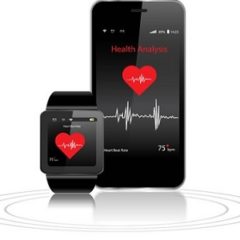
eHI and CDT Collaborate to Develop Consumer Privacy Framework for Health Data not Covered by HIPAA
The eHealth Initiative (eHI) and the Center for Democracy & Technology (CDT) have joined forces to develop a new consumer privacy framework for health data not covered by Health Insurance Portability and Accountability Act Rules. Personally identifiable health data collected, stored, maintained, processed, or transmitted by HIPAA-covered entities and their business associates is subject to the protections of the HIPAA Privacy and Security Rules. If the same data is collected, stored, maintained, processed, or transmitted by a non-HIPAA covered entity, those protections are not required by law. Currently health data is collected, stored, and transmitted by health and wellness apps, wearable devices, and informational health websites, but without HIPAA-like protections the privacy of consumer health data is put at risk. eHI and CDT have received funding for the new initiative, Building a Consumer Privacy Framework for Health Data, from the Robert Wood Johnson Foundation. They have already formed a Steering Committee for Consumer Health Privacy consisting of experts and leaders...
Malware Attack Disables Servers at Physician Network Affiliated with Boston Children’s Hospital
On Monday, February 10, 2020, Pediatric Physicians’ Organization at Children’s (PPOC), a physician group affiliated with Boston Children’s Hospital, experienced a malware attack that caused a system outage which prevented its 500+ pediatricians, nurse practitioners, and physician assistants from accessing patient data and scheduling calendars. PPOC has approximately 200 servers, 11 of which were impacted by the attack. IT teams at PPOC and Boston Children’s Hospital worked swiftly to contain the malware and the affected servers have now been quarantined. Servers unaffected by the attack were shut down as a precautionary measure. Boston Children’s Hospital issued a statement confirming its systems were unaffected by the attack. Patients were advised to reschedule non-urgent appointments as health records cannot be accessed until the malware is removed and the servers are brought back online. Children’s Hospital issued a statement on Wednesday saying progress was being made restoring the servers, but it was still unclear how long the recovery process would take. PPOC has...

Get The FREE
HIPAA Compliance Checklist
Immediate Delivery of Checklist Link To Your Email Address
Please Enter Correct Email Address
Your Privacy Respected
HIPAA Journal Privacy Policy
Get The FREE
HIPAA Compliance Checklist
Immediate Delivery of Checklist Link To Your Email Address
Please Enter Correct Email Address
Your Privacy Respected
HIPAA Journal Privacy Policy




