Steve Alder


35,800 Patients of The Otis R. Bowen Center for Human Services Notified About Email Security Breach
The Otis R. Bowen Center for Human Services, an Indiana-based provider of mental health and addiction recovery healthcare services, has announced that unauthorized individuals have gained access to the email accounts of two of its employees. It is unclear when the email account breaches occurred and for how long unauthorized individuals had access to the email accounts. In its website substitute breach notification, The Otis R. Bowen Center said an independent digital forensic investigation revealed on January 28, 2020 that PHI had potentially been accessed as a result of the attack. The review of the accounts has now been completed to determine which patients have been affected and those individuals have been individually notified by main. No mention was made about the types of information that were potentially compromised. The Otis R. Bowen Center said the investigation did not uncover any evidence to suggest that any PHI had been misused as a result of the breach but, out of an abundance of caution, affected individuals have been offered complimentary membership to credit...
Notice of Enforcement Discretion for Business Associates to Allow PHI Disclosures for Public Health and Health Oversight Activities
On April 2, 2020, the Department of Health and Human Services announced that with immediate effect, it will be exercising enforcement discretion and will not impose sanctions or financial penalties against healthcare providers or their business associates for good faith uses and disclosures of protected health information (PHI) by business associates for public health and health oversight activities for the duration of the COVID-19 public health emergency, or until the Secretary of the HHS declares the public health emergency no longer exists. The Notice of Enforcement Discretion was issued to support Federal public health authorities and health oversight agencies such as the Centers for Medicare and Medicaid Services (CMS), the Centers for Disease Control and Prevention (CMS), state and local health departments, and other emergency operation centers that require timely access to COVID-19 related data. While disclosures of PHI by HIPAA-covered entities for public health and health oversight purposes are permitted under the HIPAA Privacy Rule, currently business associates of HIPAA...
Microsoft Helps Healthcare Organizations Protect Against Human-Operated Ransomware Attacks
The COVID-19 pandemic is forcing many employees to work from home and the infrastructure used to support those workers is being targeted by human-operated ransomware gangs. While several ransomware operators have stated they will not attack healthcare organizations during the COVID-19 public health emergency, not all cybercrime gangs are taking it easy on the healthcare sector and attacks are continuing. Several cybercrime groups are using the COVID-19 pandemic to their advantage. Tactics, techniques and procedures (TTPs) have been changed in response to the pandemic and they are now using social engineering tactics that prey on fears about COVID-19 and the need for information to gain access to credentials to gain a foothold in healthcare networks. Ransomware attacks on hospitals can cause massive disruption at the best of times. Ransomware attacks that occur while hospitals are trying to respond to the pandemic will severely hamper their efforts to treat COVID-19 patients. Microsoft has committed to help protect critical services during the COVID-19 crisis and has recently...
Ransomware Attacks Reported by Stockdale Radiology and Affordacare Urgent Care Clinics
Stockdale Radiology in California has announced that patient data has been compromised as a result of a ransomware attack on January 17, 2020. An internal investigation confirmed that the attackers gained access to patients’ first and last names, addresses, refund logs, and personal health information, including doctor’s notes. Stockdale Radiology said a limited number of patient files were publicly exposed by the attackers. Stockdale Radiology also discovered on January 29, 2020, that further patient information may have been accessed, but has not been publicly disclosed. Systems were immediately shut down to prevent any further unauthorized data access and a third-party computer forensics firm was engaged to investigate the breach and determine how access was gained and who was affected. The FBI was immediately notified about the attack and arrived at Stockdale Radiology within 30 minutes. The FBI investigation into the breach is ongoing. In response the attack, Stockdale Radiology has conducted a review of internal data management and its security protocols and has taken steps...

Vulnerability Identified in BD Pyxis MedStation and Pyxis Anesthesia (PAS) ES System
Becton, Dickinson and Company (BD) has identified a medium severity vulnerability in version 1.6.1 of the BD Pyxis MedStation medication dispensing system and the Pyxis Anesthesia (PAS) ES System of its anesthesia carts. If exploited, the vulnerability would allow an attacker to gain access to sensitive data. BD devices use a software application implementation called kiosk mode. When in kiosk mode, restrictions are in place that limit the actions that can be performed. The vulnerability is a protection mechanism failure (CWE-693) which could allow an attacker to escape the restricted desktop environment, which would allow sensitive data to be accessed and altered. The vulnerability only requires a low level of skill to exploit, but exploitation would require physical access to a vulnerable device. BD has performed a risk evaluation and has determined the risk of exploitation is low. As such, the vulnerability has been assigned a CVSS v3 base score of 6.8 out of 10. BD is proactive in assessing its products to identify security vulnerabilities. The company operates with...

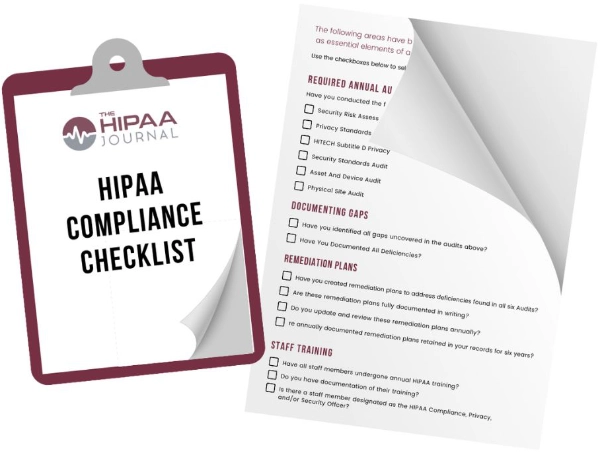
Get The FREE
HIPAA Compliance Checklist
Immediate Delivery of Checklist Link To Your Email Address
Please Enter Correct Email Address
Your Privacy Respected
HIPAA Journal Privacy Policy
Get The FREE
HIPAA Compliance Checklist
Immediate Delivery of Checklist Link To Your Email Address
Please Enter Correct Email Address
Your Privacy Respected
HIPAA Journal Privacy Policy