Steve Alder


Beaumont Health Discovers 20-Month Insider Breach
Beaumont Health, a not-for-profit 8-hospital health system based in Southfield, MI, has discovered a former employee has accessed the medical records of patients without authorization and is understood to have shared protected health information with another individual. An internal investigation was launched when it was discovered medical records had been accessed without authorization. A review of the former employee’s access logs revealed the unauthorized access first occurred on February 1, 2017 and continued until October 22, 2019. The breach was discovered in December 2018. Beaumont Health said its internal investigation determined on December 10, 2019 that the medical records of 1,182 patients were accessed over a period of 20 months. The information potentially obtained and disclosed included names, addresses, contact telephone numbers, dates of birth, email addresses, health insurance information, reason why medical care was sought, and Social Security numbers. The individual to whom the information was believed to have been disclosed was affiliated with a personal injury...
Nearly 200,000 Patients Impacted by PIH Health Phishing Attack
PIH Health, a 2-hospital nonprofit healthcare network based in Whittier, CA, has started notifying nearly 200,000 patients about a potential breach of their personal and protected health information in June 2019. On June 18, 2019, PIH Health discovered the email accounts of certain employees had been accessed by unauthorized individuals as a result of a targeted phishing attack on its employees. The email accounts were immediately secured and an investigation was launched to determine the nature and extent of the breach. PIH Health engaged leading cybersecurity experts to assist with the investigation and was notified on October 2, 2019, that the email accounts were subject to unauthorized access between June 11, 2019 and June 18, 2019. The email accounts were then reviewed by the same cybersecurity experts to determine whether they contained any patient information. The review was completed on November 12, 2019. PIH Health then attempted to obtain up to date contact information for current and former patients affected by the breach. Notifications were sent by mail to those...
Critical ‘MDHex’ Vulnerabilities Identified in GE Healthcare Patient Monitoring Products
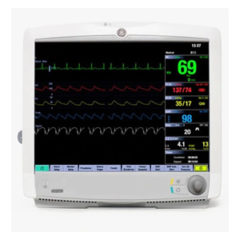
Critical vulnerabilities have been identified in GE Healthcare patient monitoring products by a security researcher at CyberMDX. Elad Luz, Head of Research at CyberMDX, identified six vulnerabilities, five of which have been rated critical and one high severity. The five critical vulnerabilities have been assigned the maximum CVSS v3 score of 10 out of 10. The other vulnerability has a CVSS v3 score of 8.5 out of 10. Exploitation of the flaws could render the affected products unusable. Remote attackers could also alter the functionality of vulnerable devices, including changing or disabling alarm settings, and steal protected health information stored on the devices. CyberMDX initially investigated the CARESCAPE Clinical Information Center (CIC) Pro product, but discovered the flaws affected patient monitors, servers, and telemetry systems. The vulnerabilities have been collectively named MDHex and are tracked under the CVEs: CVE-2020-6961, CVE-2020-6962, CVE-2020-6963, CVE-2020-6964, CVE-2020- 6965, and CVE-2020-6966. GE Healthcare has confirmed that the vulnerabilities could...
Maze Ransomware Gang Publishes Research Data of Medical Diagnostic Laboratories
The operators of Maze ransomware are following through on their threats to publish stolen data if victims do not pay the ransoms. In December, the Carrollton, GA-based wire and cable manufacturer Southwire refused to pay a 200 BTC ransom ($1,664,320) and the threat actors went ahead and published some of the stolen data. Southwire filed a lawsuit in the Northern District of Georgia against the Maze team and the ISP hosting the Maze Team’s website. The case was won, and the website was taken offline; however, the website was back online with a different hosting provider a few days later. Listed on the webpage are the names of the companies that have been attacked and refused to pay the ransom demand, along with some of the data stolen in the attacks. One of those companies is New Jersey-based Medical Diagnostic Laboratories (MDLab). According to the Maze Team, MD Lab was attacked on December 2, 2019. MD Lab made contact with the Maze team, but negotiations stalled, and no ransom was paid. According the Maze website, 231 workstations were encrypted in the attack. When MD Lab refused...
CISA Issues Warning About Increase in Emotet Malware Attacks
A warning has been issued by the U.S. Cybersecurity and Infrastructure Security Agency (CISA) about a recent increase in Emotet malware attacks. Emotet was first detected in 2014 and was initially developed to steal banking credentials, but it has seen considerable development over the past five years and is now is a highly sophisticated Trojan. In addition to stealing banking credentials, Emotet can steal passwords stored in web browsers and the credentials files of external drives. Modules have been added that allow it to propagate via email and download other malware variants. The malware has been used to infect devices with cryptocurrency miners and cryptowallet stealers, the TrickBot banking Trojan, and Ryuk ransomware. These additional payloads are often downloaded weeks, months, or even years after the initial Emotet infection. Emotet malware is primarily delivered via spam email. Initially, the malware was spread by JavaScript attachments; however, the threat actors behind the malware have now switched to Office documents with malicious macros that run PowerShell commands...

Get The FREE
HIPAA Compliance Checklist
Immediate Delivery of Checklist Link To Your Email Address
Please Enter Correct Email Address
Your Privacy Respected
HIPAA Journal Privacy Policy
Get The FREE
HIPAA Compliance Checklist
Immediate Delivery of Checklist Link To Your Email Address
Please Enter Correct Email Address
Your Privacy Respected
HIPAA Journal Privacy Policy