

Steve Alder


Average Ransomware Payment Increased 13% to $41,198 in Q3, 2019
Ransomware is still one of the biggest cybersecurity threats faced by healthcare organizations. Not only have the attacks increased, ransom demands have increased. A new analysis by ransomware remediation and incident response firm Coveware has revealed the average ransom payment has increased by 13% to $41,198 in Q3, 2019, which is six times as much as in December 2018. Many companies have to pay considerably more. The attackers using Ryuk ransomware tend to demand payments of hundreds of thousands of dollars. Ryuk ransom payments between Q2 and Q3, 2019 ranged from $267,742 to $377,026. Ransom demands issued to large enterprises are often over $1 million. While no industry is immune to ransomware attacks, they tend to be concentrated on certain industries where there is a higher than average chance of the ransom being paid. The most targeted industry sectors are professional services (18.3%), the public sector (13.3%), healthcare (12.8%), software services (11.7%), and the retailers (8.3%). There has also been an increase in attacks on managed service providers. These attacks...
BlueKeep Vulnerability Being Actively Exploited in Real World Attacks
In May 2019, Microsoft made an announcement about a critical remote code execution vulnerability in Windows Remote Desktop Services named BlueKeep – CVE-2019-0708. The cybersecurity community predicted that a weaponized exploit would be developed and be used in large-scale attacks. That prediction has now come true. Over the weekend, the first mass attacks using a BlueKeep exploit were discovered. Soon after Microsoft announced the vulnerability, several security researchers developed proof-of-concept exploits for BlueKeep. One such exploit allowed a researcher to remotely take control of a vulnerable computer in just 22 seconds. The researchers held off publishing their PoC’s due to the seriousness of the threat and the number of devices that were vulnerable to attack. Initially, millions of internet-connected devices were at risk, including around a million Internet of Things (IoT) devices. The BlueKeep vulnerability can be exploited remotely by sending a specially crafted RDP request. No user interaction is required to exploit the vulnerability. The flaw is also wormable, which...
Brooklyn Hospital Center Malware Attack Results in Loss of Patients’ Health Records
Brooklyn Hospital Center in New York has announced that a security breach occurred in late July 2019 that resulted in malware being installed on some of the hospital’s servers. The attack was discovered promptly, and steps were taken to limit the harm caused; however, it was not possible to prevent certain files from being encrypted. A third-party digital forensics firm was retained to assess the nature and extent of the malware attack and assist with the recovery of encrypted files. On September 4, following ‘exhaustive efforts’ to recover the encrypted files, it was determined that certain patient information was unrecoverable. Entire medical records have not been lost, but some patients’ dental and cardiac images could not be restored. The hospital is currently conducting a review to determine which patients have been affected and those individuals will be notified in due course. As is often the case with ransomware attacks such as this, the goal of the attackers appears to have been to extort money from the hospital rather than gain access to patient information. No reports of...
California Mental Health Services Provider Discovers Unauthorized Email Account Access and File Deletion
The Guidance Center (TGC), a nonprofit provider of mental health care services to disadvantaged children and their families in Long Beach, Compton, San Pedro, and Avalon in California, has discovered a breach of its digital environment. In a breach notification letter to the California Attorney General, Xavier Becerra, TGC’s counsel explained that unusual activity was detected within TGC’s digital environment in late March 2019. Staff had reported that files and backups appeared to be missing. An internal investigation was launched which concluded the files had been deleted. Further investigation also showed that a TGC computer had been reconfigured to allow it to be remotely accessed. TGC believes the change to the computer and deletion of files was most likely the work of a former employee. The matter was reported to both the Long Beach Police Department and the FBI, and the individual suspected of the illegal access was sent a cease and desist letter by TGC’s attorney on March 30, 2019. Following that letter, all further unauthorized access stopped. On April 19, 2019, TGC...
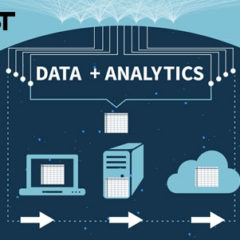
NIST Releases Final Big Data Interoperability Framework
The National Institute of Standards and Technology (NIST) has released its final Big Data Interoperability Framework (NBDIF) to help with the creation of data analysis software tools that can run on any computing platform and be easily moved from one computing platform to another. NBDIF is the culmination of several years of work and collaboration with more than 800 experts from the government, academia, and private sector. The final document is divided into nine volumes covering big data definitions and taxonomies, use case & requirements, privacy and security, reference architecture, roadmap standards, a reference architecture interface, and modernization and adoption. The main purpose of NBDIF is to guide developers on the creation and deployment of widely useful tools for big data analysis that can be used on different computing platforms; from a single laptop computer to multi-node cloud-based environments. Developers need to create their big data analysis tools to allow them to easily be moved from one platform to another and allow data analysts to be able to switch to...

Get The FREE
HIPAA Compliance Checklist
Immediate Delivery of Checklist Link To Your Email Address
Please Enter Correct Email Address
Your Privacy Respected
HIPAA Journal Privacy Policy
Get The FREE
HIPAA Compliance Checklist
Immediate Delivery of Checklist Link To Your Email Address
Please Enter Correct Email Address
Your Privacy Respected
HIPAA Journal Privacy Policy




